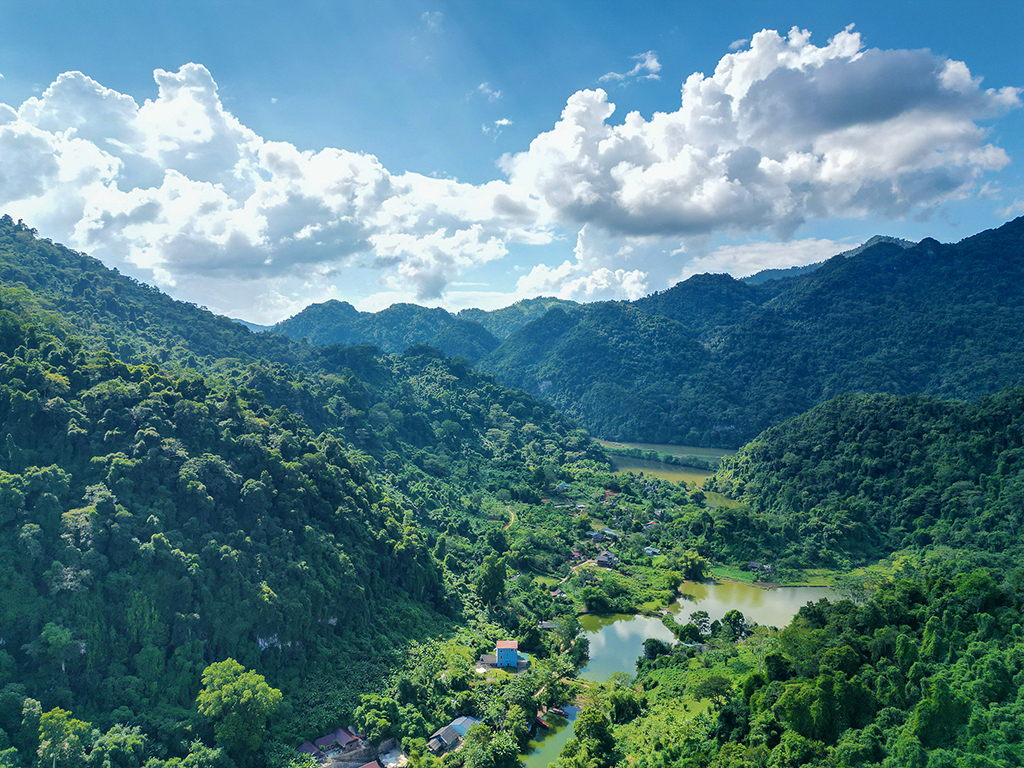
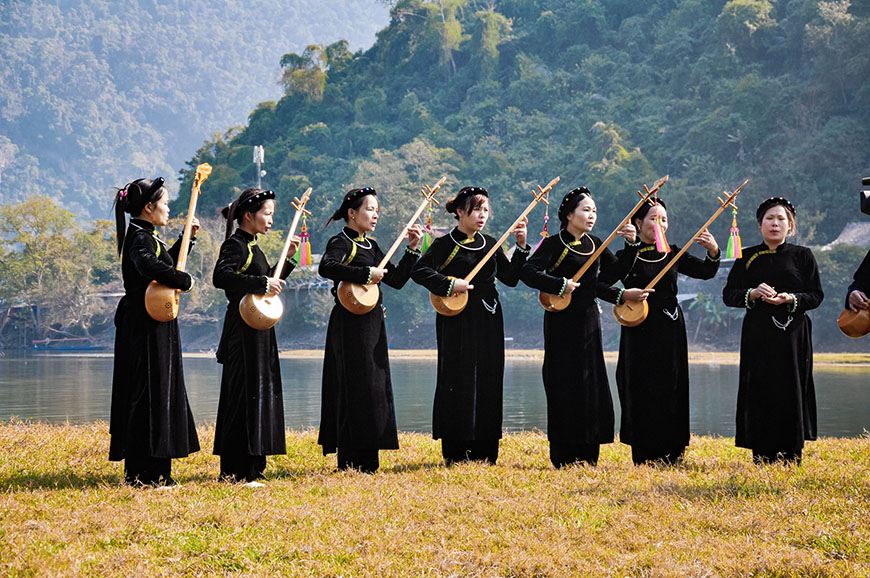
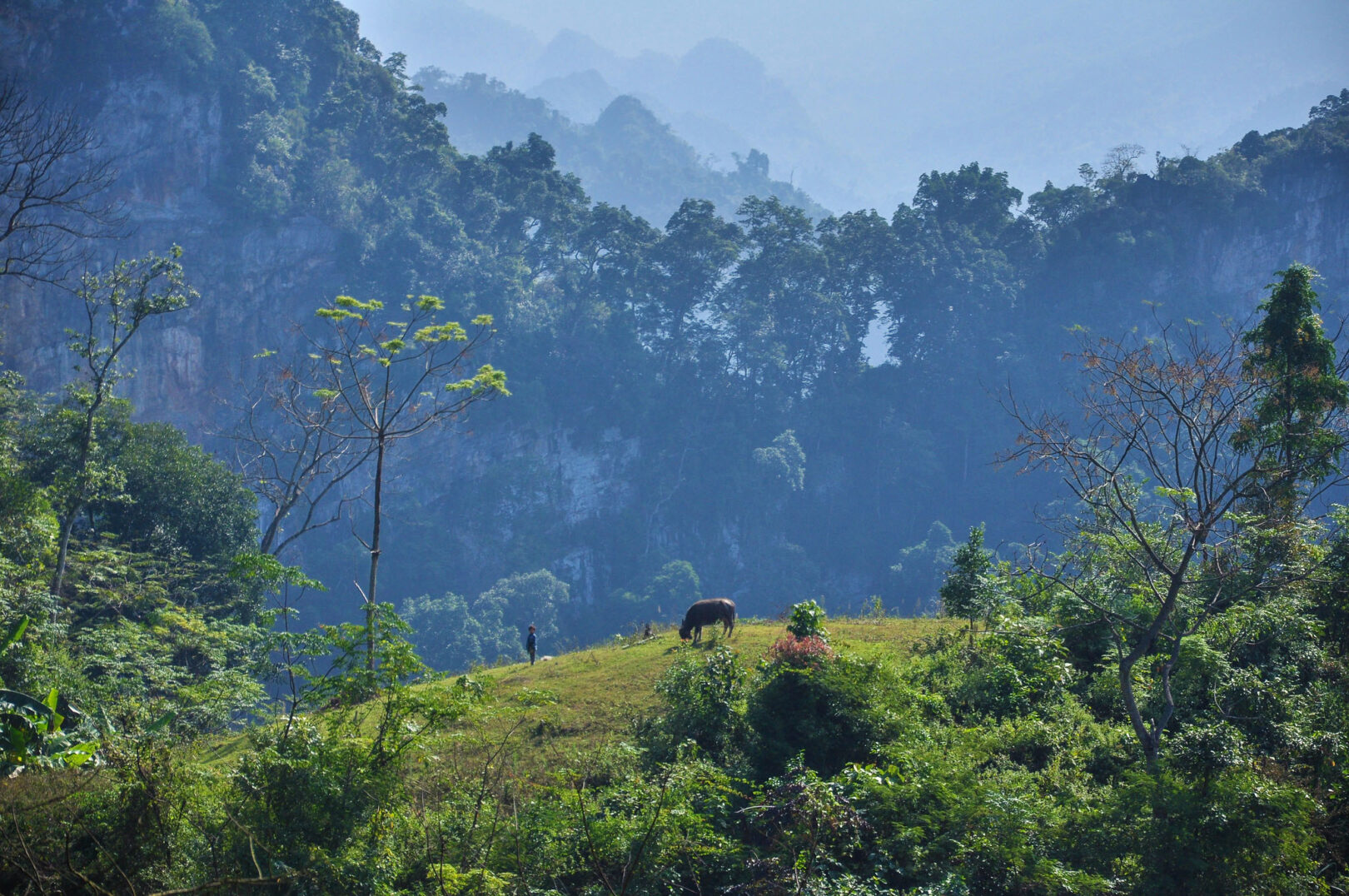
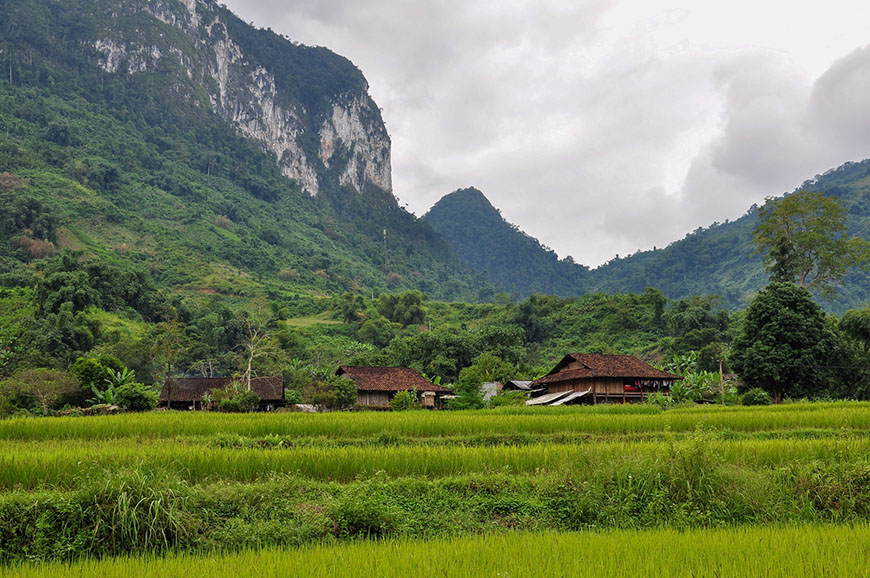
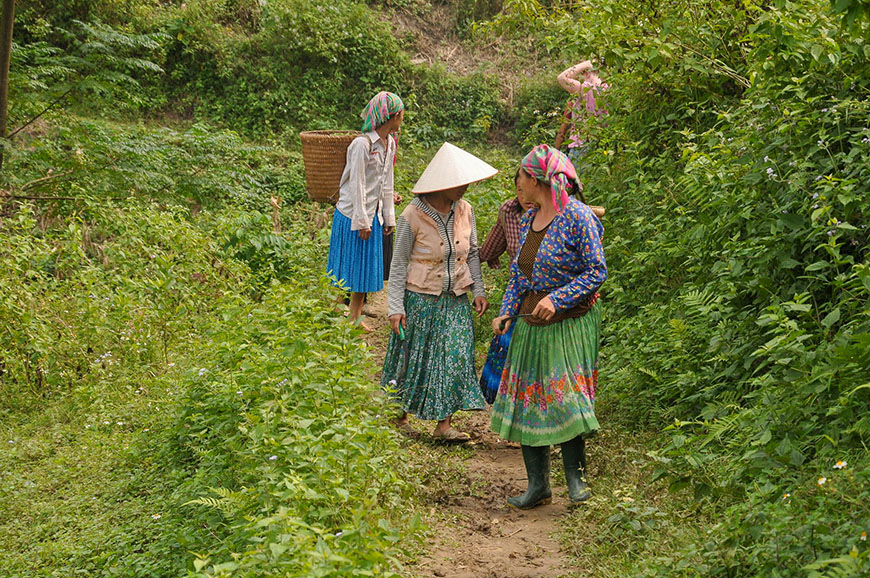
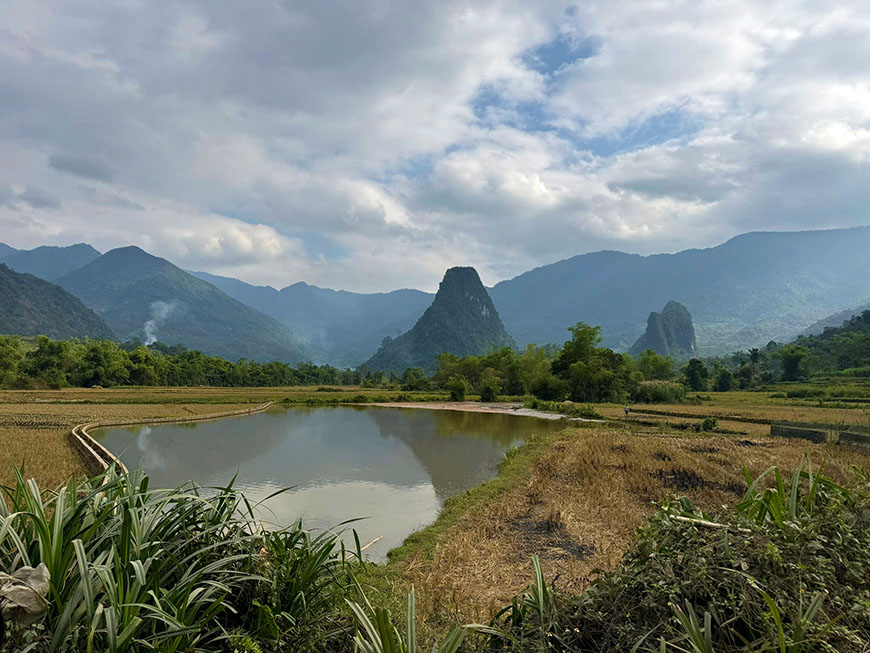
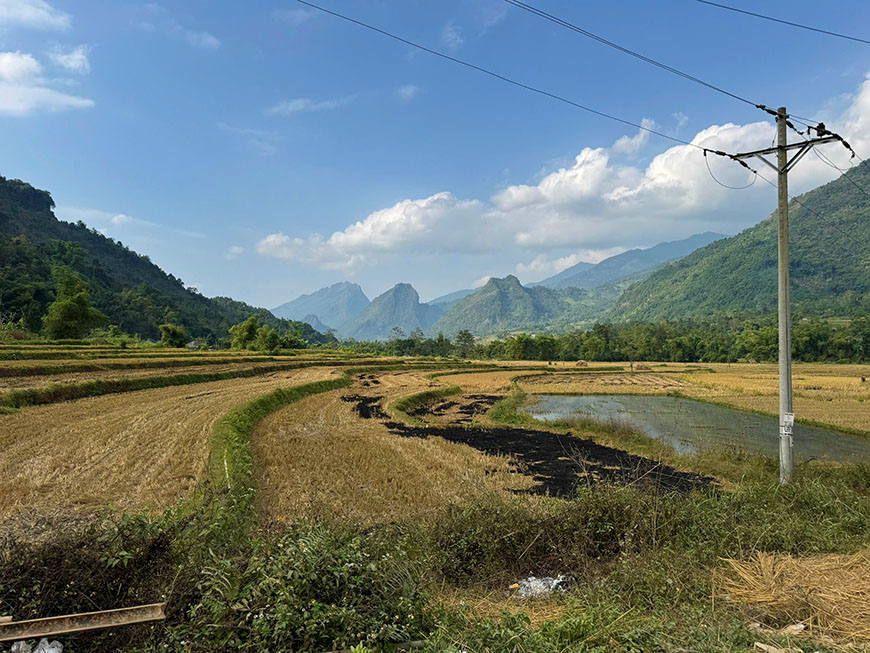
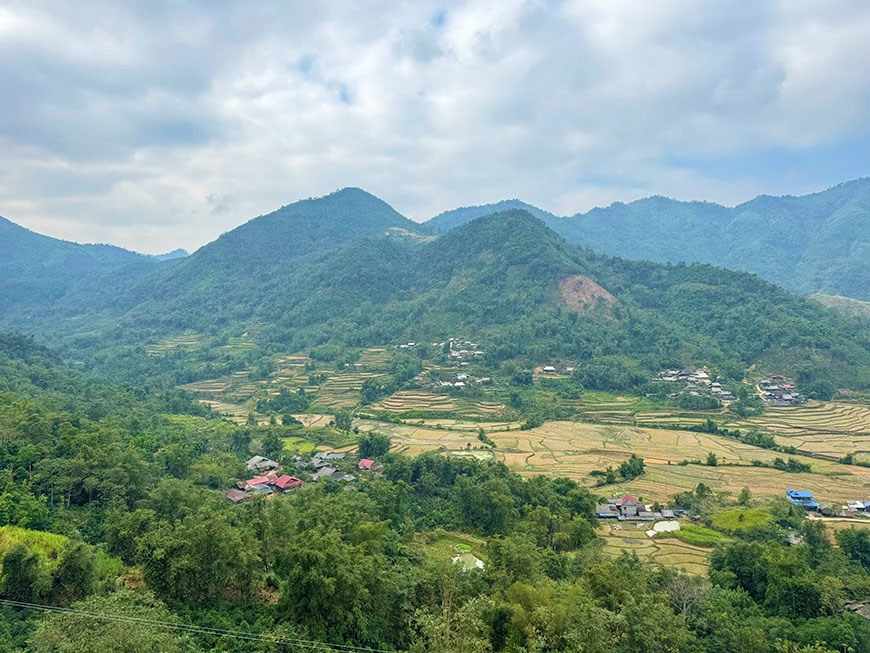
Imagine a place where time seems to have stood still, in the heart of Ba Be National Park in Vietnam. This is where the Tay people live, one of the largest ethnic minorities in the country, with their unique traditions dating back over 2000 years!
Traditional Tay Houses – Mr Linh’s Adventures
What makes the Tay so special?
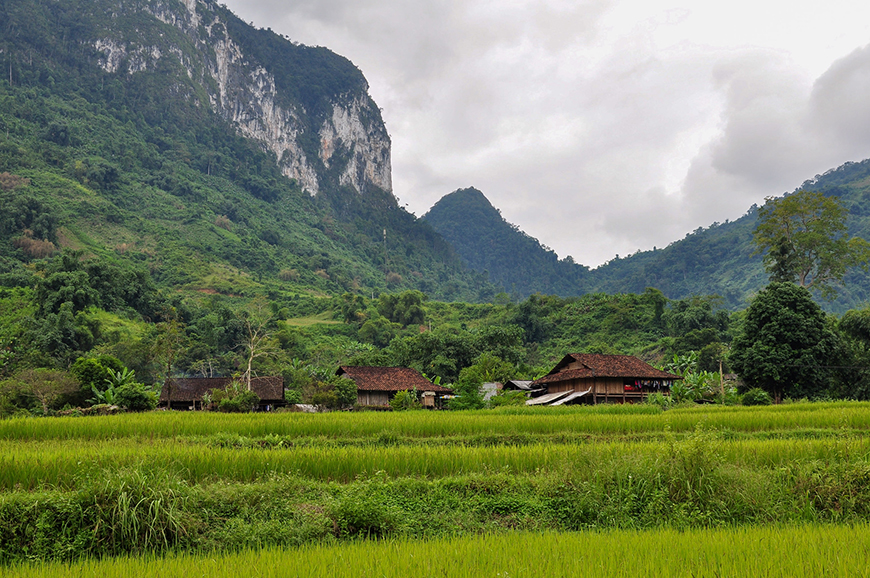
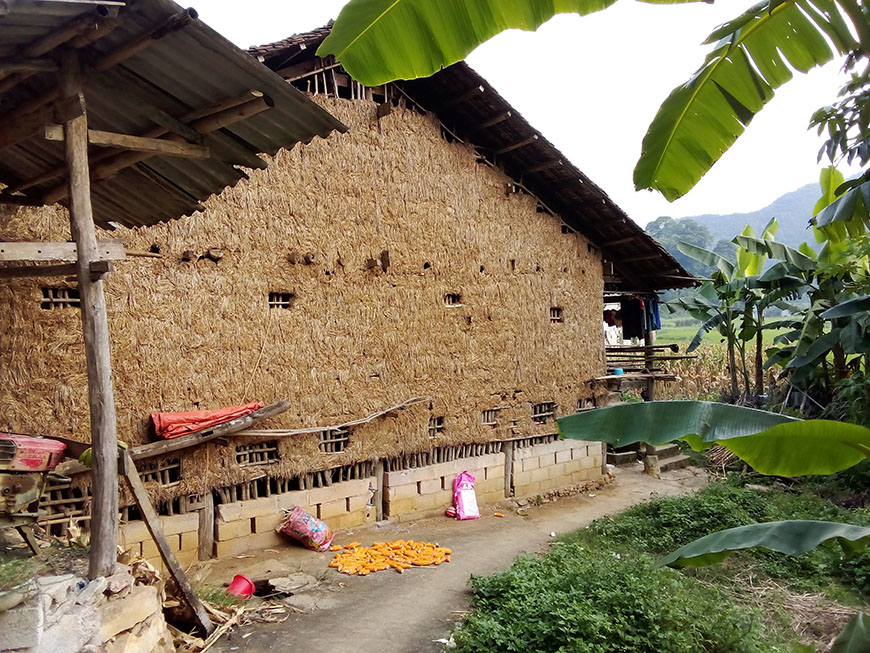
Their stilt houses are true masterpieces of traditional architecture. Built without a single nail, they are perfectly adapted to their environment. The ground floor serves as a stable or storage area, while the family lives upstairs.
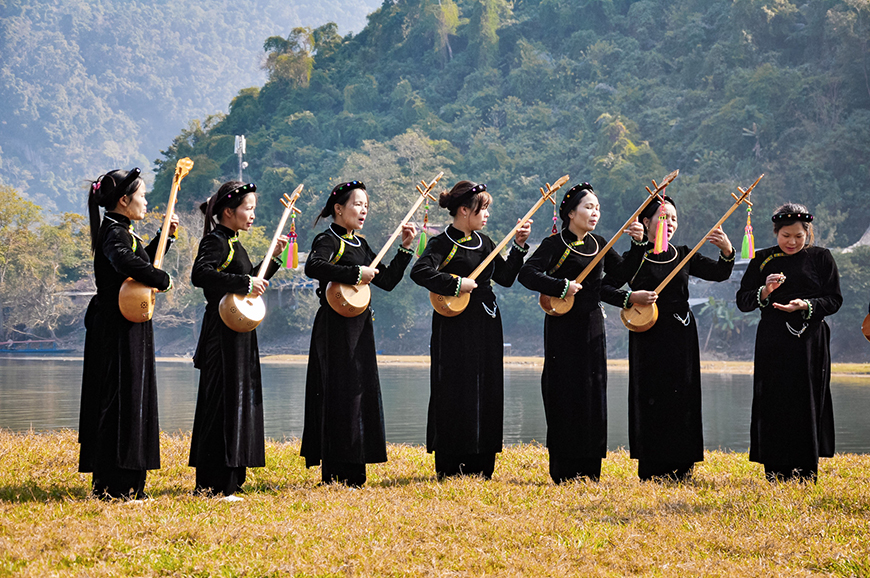
The Tay are divided into five groups, each with their distinctive style of clothing: the Tho dress like the Thais, the Ngan wear short shirts, the Phen prefer brown, the Thu Lao sport a pyramidal headband, and the Pa Di are distinguished by their roof-shaped hats.
Music plays a central role in their culture. The dan tinh (string instrument) and the Then singing recount their stories and legends. These oral traditions are their way of preserving their heritage.
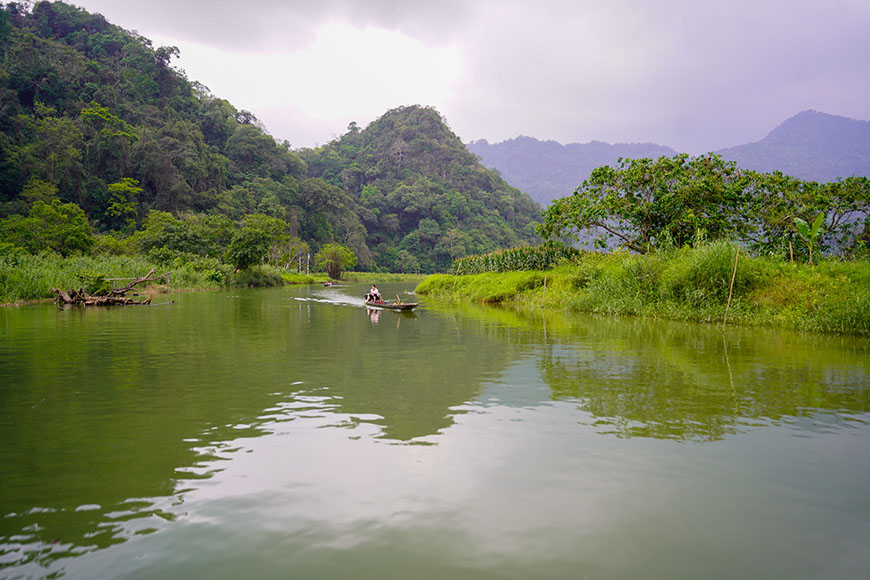
On the lake, you will come across their “doc moc” canoes, carved from a single tree trunk – a true symbol of their way of life.
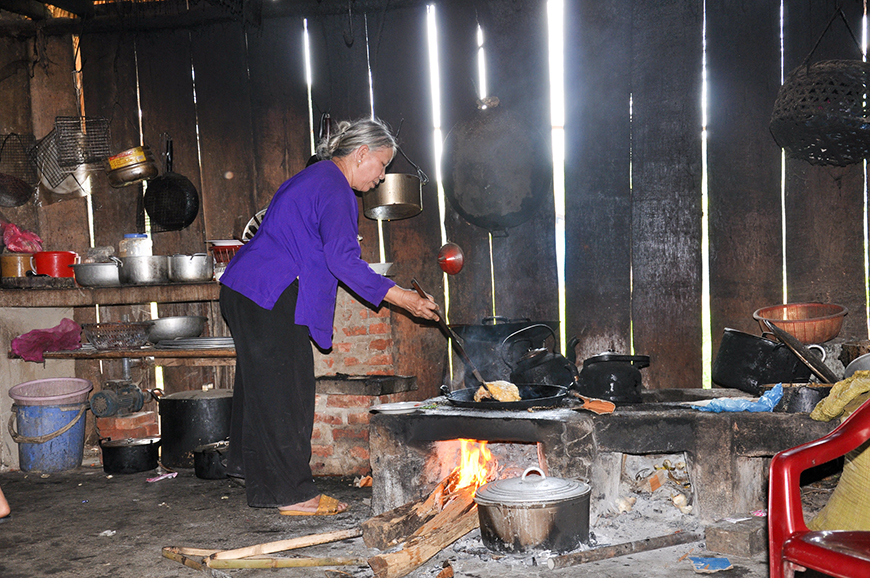
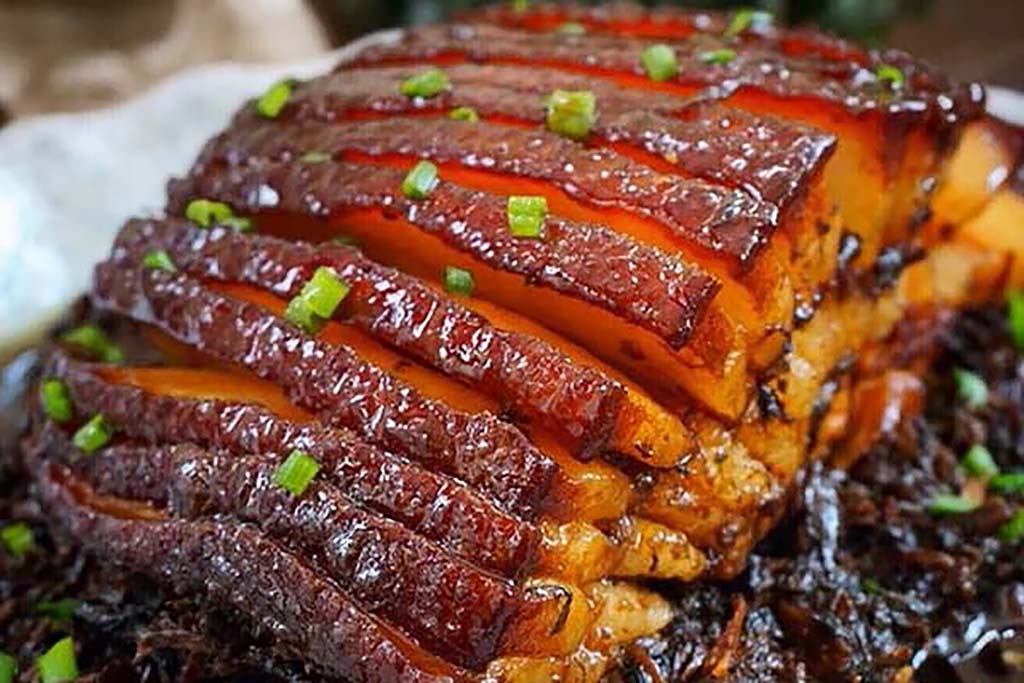
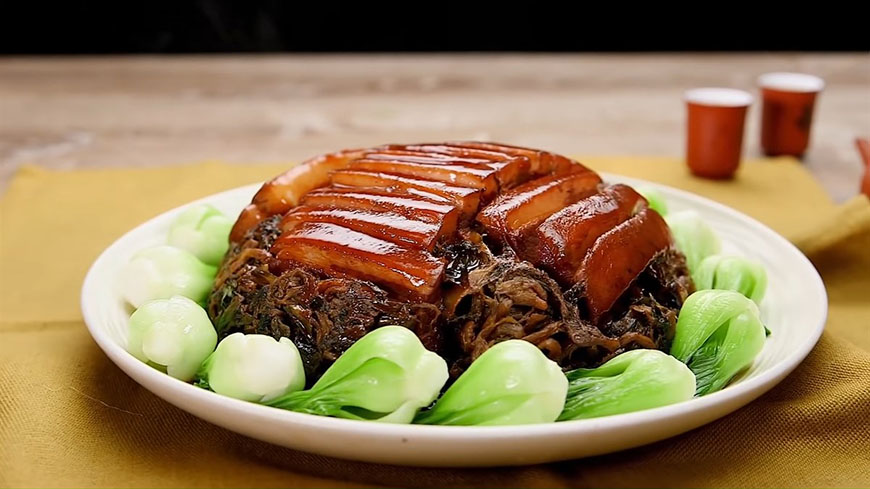
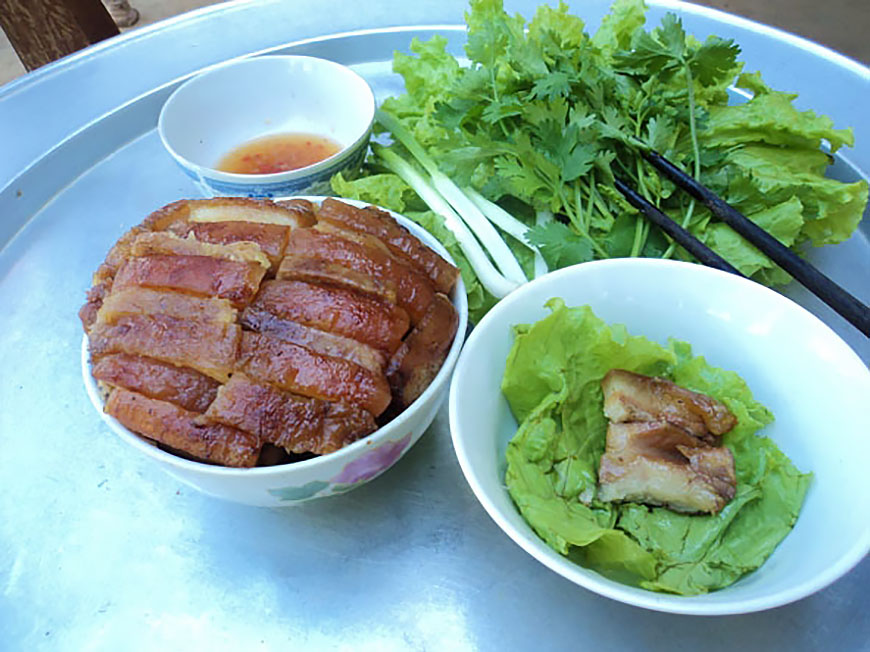
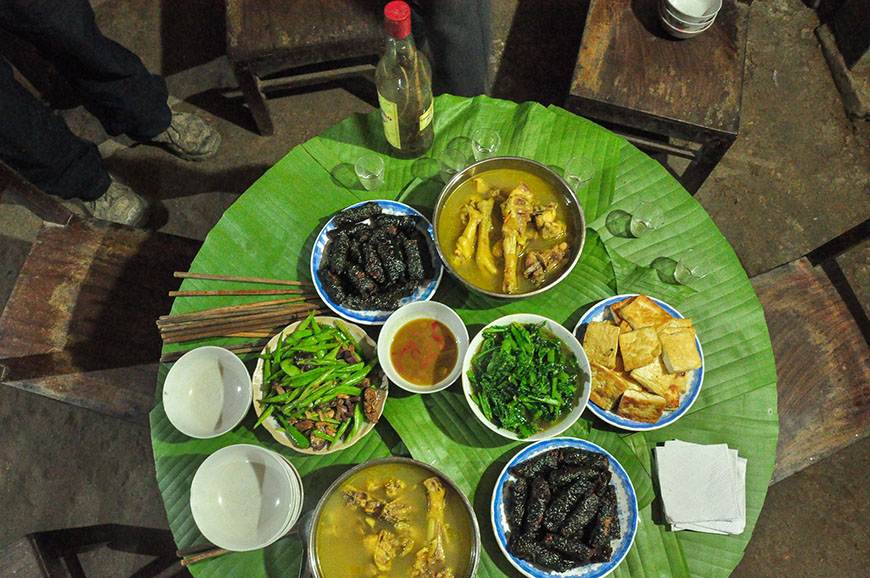
In terms of cuisine, it’s a festival of flavors! Don’t miss their famous Banh Cooc Mo (horn-shaped rice cake), smoked pork, fermented shrimp, and fish soups flavored with herbs.
The Tay mainly practice Then, a religion that blends ancestor worship and Taoist influences. Their festivals, like the Lồng tồng (“field descent” ceremony), mark the year.
Today, you can meet the Tay in the villages of Coc Toc, Pac Ngoi, and Ban Cam. They continue their traditions while adapting to the modern world, creating a fascinating blend of old and new.
So, the next time you pass through Vietnam, make a detour to Ba Be. The Tay will welcome you with open arms, happy to share their unique culture and authentic way of life with you!
A hidden gem of Vietnam, Ba Be lake is a true treasure for travelers seeking wild nature, authentic adventure, and total immersion. With its crystal-clear waters, green shores, and fascinating biodiversity, it’s the perfect place for an unforgettable kayaking getaway.
Ba Be lake, a true natural gem of Vietnam
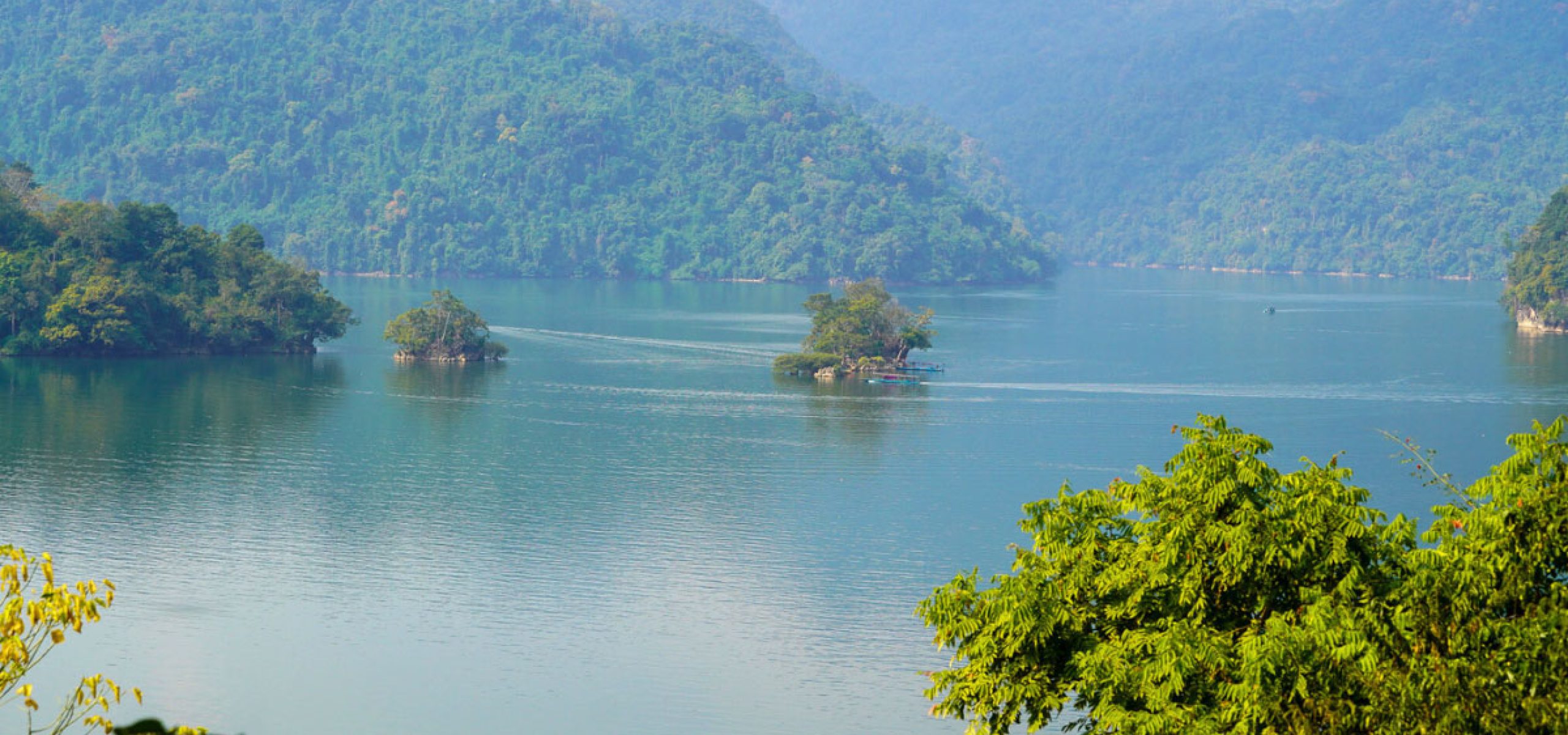
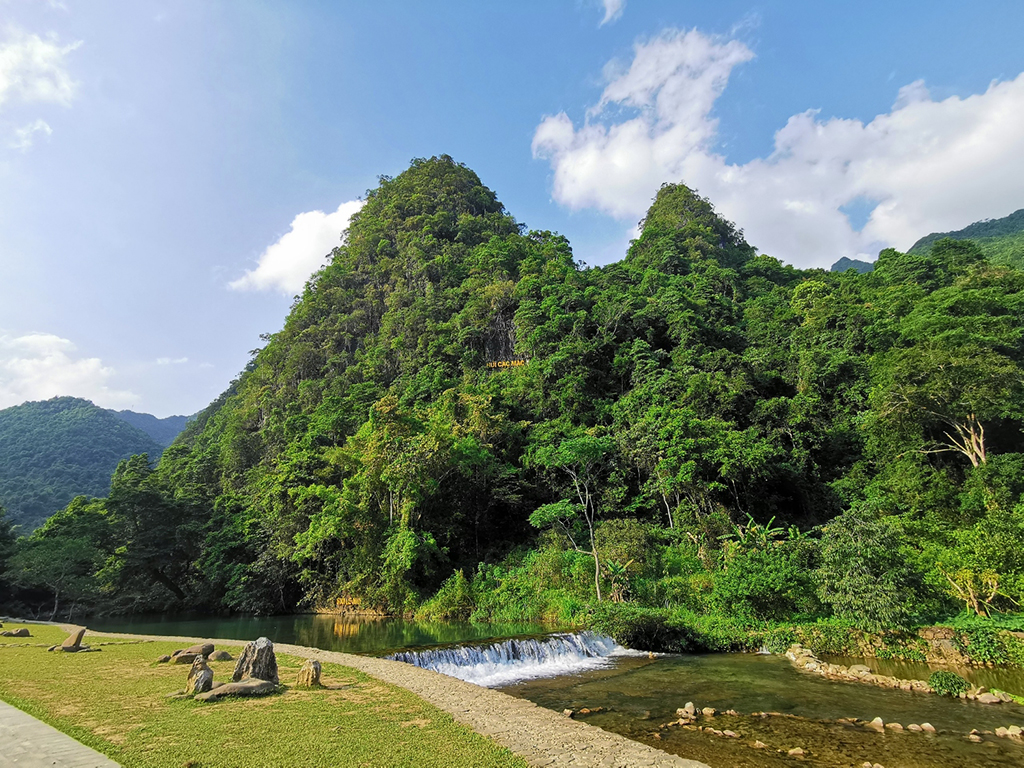
Nestled in the heart of Ba Be National Park, the majestic Lake Ba Be is the largest natural lake in the country. Surrounded by limestone mountains and lush forests, this exceptional site captivates with its stunning beauty and remarkable biodiversity.
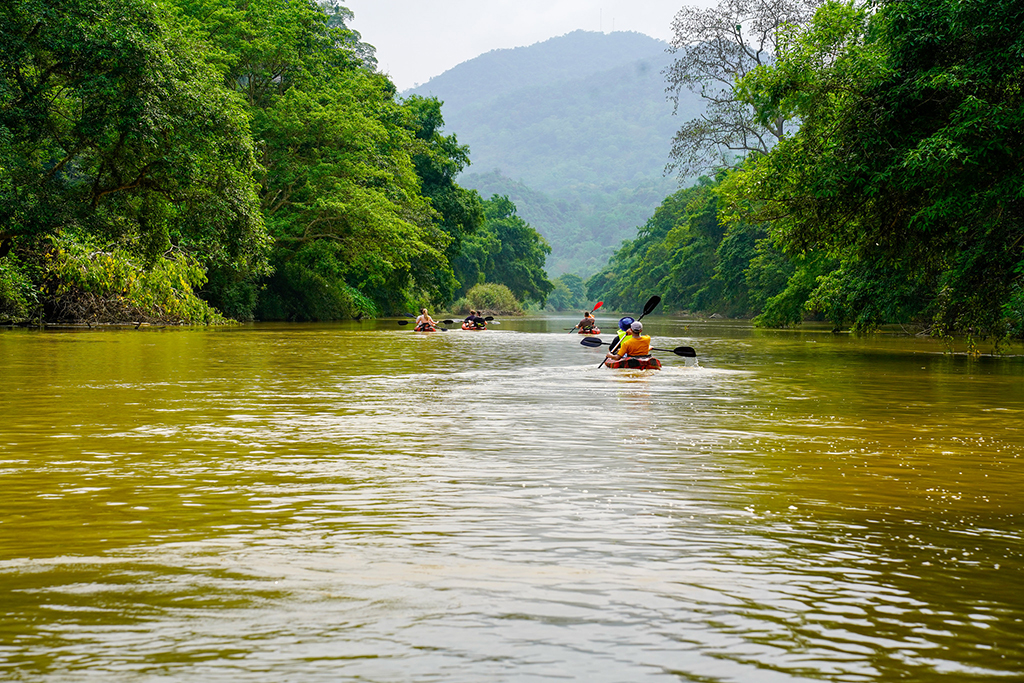
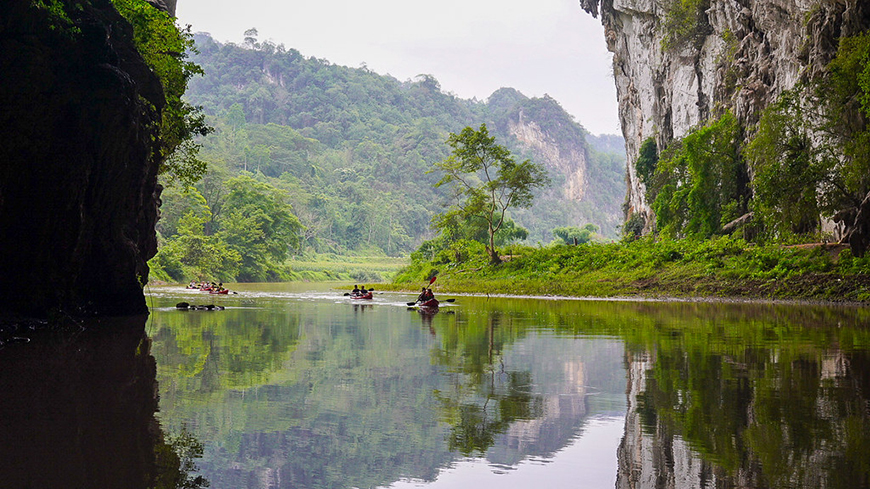
In this dreamlike setting, kayaking stands out as the essential activity to fully explore the wonders of the lake.
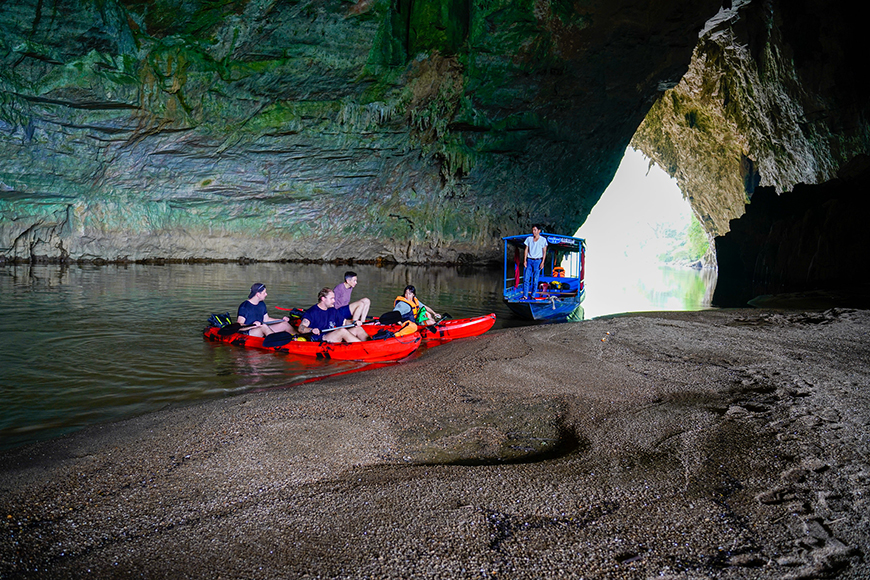
Kayaking to Puong Cave – Mr Linh’s Adventures
Why indulge in paddling on this enchanting lake?
Three good reasons:
Firstly, kayaking will allow you to discover the most remote and hidden corners of this haven of peace. Navigate to encounter stunning flora and fauna: colorful birds, delicate butterflies, fish swimming in the crystal-clear waters, and with a bit of luck, mischievous monkeys and elegant otters. Prepare your best shots, you’ll come back with an album worthy of a National Geographic documentary!
Next, this water adventure will offer you an authentic immersion into the local culture. Lake Ba Be is home to several ethnic minority villages, such as the Tày and Dao. Let yourself be carried to these warm communities, meet their inhabitants, admire their refined craftsmanship, and learn about their traditional cuisine. An extraordinary cultural immersion!
Lastly, kayaking is a gentle and relaxing activity, ideal for recharging in nature. Rocked by the gentle lapping of the water, the birdsong, and the beauty of the landscapes, you can clear your mind and reconnect with yourself. A guaranteed experience of well-being and fulfillment!
What is the best season for kayaking on Lake Ba Be?
Timing-wise, the best period for kayaking on Lake Ba Be is between March and May, and then from September to November. The climate is mild and sunny during these times, with a more moderate tourist influx than in the high season. However, feel free to venture onto the water all year round, depending on your desires and tolerance to weather conditions.
Rural Life Ba Be National Park – Mr Linh’s Adventures
How do I organize my kayaking excursion?
Several options are available:
Rent a kayak for a full day or half-day from local providers, especially located in the villages of Bo Lu and Khang Ninh. You can choose a solo or double model according to your preferences.
Opt for a guided tour with a reputable local agency, such as Mr. Linh’s Adventures. Their passionate guides will take you to discover the most beautiful sites of the lake and share their intimate knowledge of the region.
Remember to equip yourself with comfortable clothing, sunscreen, mosquito repellent, and a water bottle. Sports shoes or sandals suitable for walking on water will be ideal.
Lake Ba Be and its wonders await you for an extraordinary kayaking experience. So don’t hesitate, grab your paddles and let yourself be carried away by the magic of this Vietnamese gem!
Tet, or the Lunar New Year, is the most important festival in the Vietnamese calendar. It is a time for family reunions, ancestral traditions, and special dishes. Among these, bánh dày (bánh giầy) holds a special place. This sticky rice cake, in the form of a round and flat cake, is more than just food: it is a symbol of family unity, gratitude towards ancestors, and hope for the coming year.
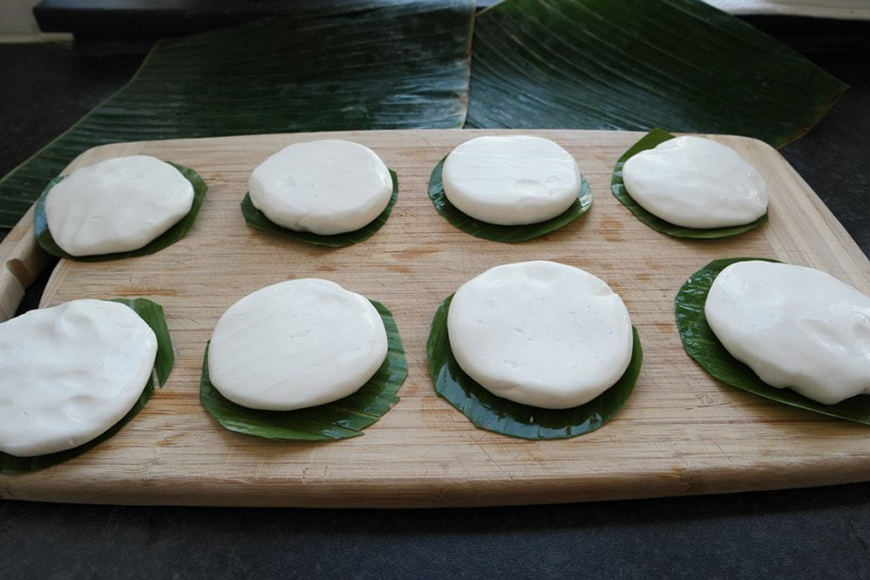
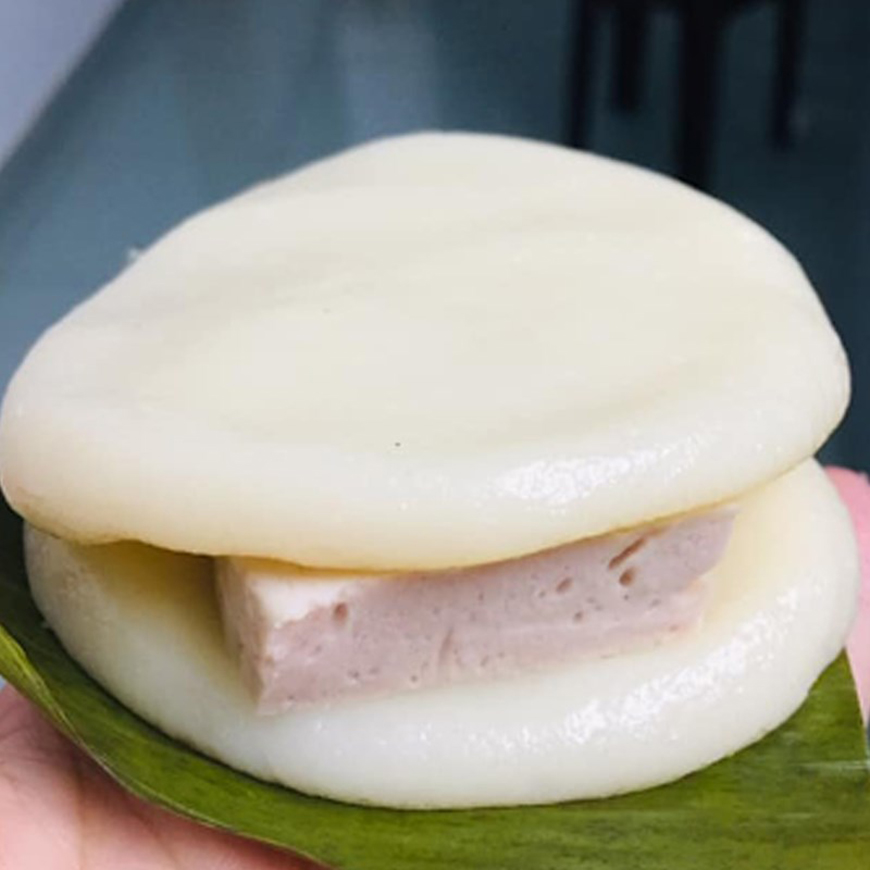
Banh Giay, a must-have on Lunar New Year tables – Photo : Collected
Origins and Legends
The story of Banh Day is closely linked to that of Banh Chung, another traditional sticky rice cake for Tet. According to legend, these two cakes were created by Prince Lang Lieu, the son of King Hung Vuong VI, thousands of years ago. The king challenged his sons to prepare the most special dish for New Year, and Lang Lieu, inspired by a dream, created Banh Chung, symbolizing the Earth, and Banh Day, symbolizing the Sky.
Banh Day, with its round shape and white color, can also represent the moon, a source of fertility and prosperity in Vietnamese culture. It is often consumed alongside Banh Chung, which symbolizes the Earth with its square shape and green color. Together, these two cakes represent the harmony between Heaven and Earth, a fundamental concept of Asian philosophy.
Did you know? In the South, Banh Tet is prepared, which has a cylindrical shape. It symbolizes the Earth.
Although Banh Day is consumed throughout Vietnam, it is particularly popular in the Northern regions, especially in Bac Kan, where it is considered a local specialty. Each region has its own way of preparing Banh Day, with variations in ingredients and cooking methods.
In Bac Kan, Banh Day is often prepared with mung beans, which give it a softer texture and a slightly sweet taste. It is also wrapped in banana leaves, giving it a subtle and characteristic aroma.
The preparation of Banh Day is a long and meticulous process, requiring several hours of work. The sticky rice is first soaked for several hours, then steamed until tender and sticky. It is then mixed with mung bean paste and shaped into round, flat cakes. The cakes are wrapped in banana leaves and steamed for about 30 minutes.
Banh Day is usually consumed hot or cold, sliced, with Gio Cha (Vietnamese pork pate) or Nem Chua (fermented pork sausage). It can also be enjoyed on its own, plain or with a sweet and sour sauce.
Symbolism and Traditions
Banh Day goes beyond being just a dish: it is a symbol of Vietnamese cultural identity and an essential element of Tet celebrations. It is often offered as a gift to parents and friends as a sign of respect and affection.
The preparation of Banh Day is a family activity that usually takes place a few days before Tet. It is an opportunity for family members to gather, share stories, and pass down culinary traditions from generation to generation.
Banh Day is a treasure of Vietnamese gastronomy, a dish full of history, symbolism, and traditions. Its preparation and consumption are special moments of Tet, strengthening family ties and celebrating the richness of Vietnamese culture.
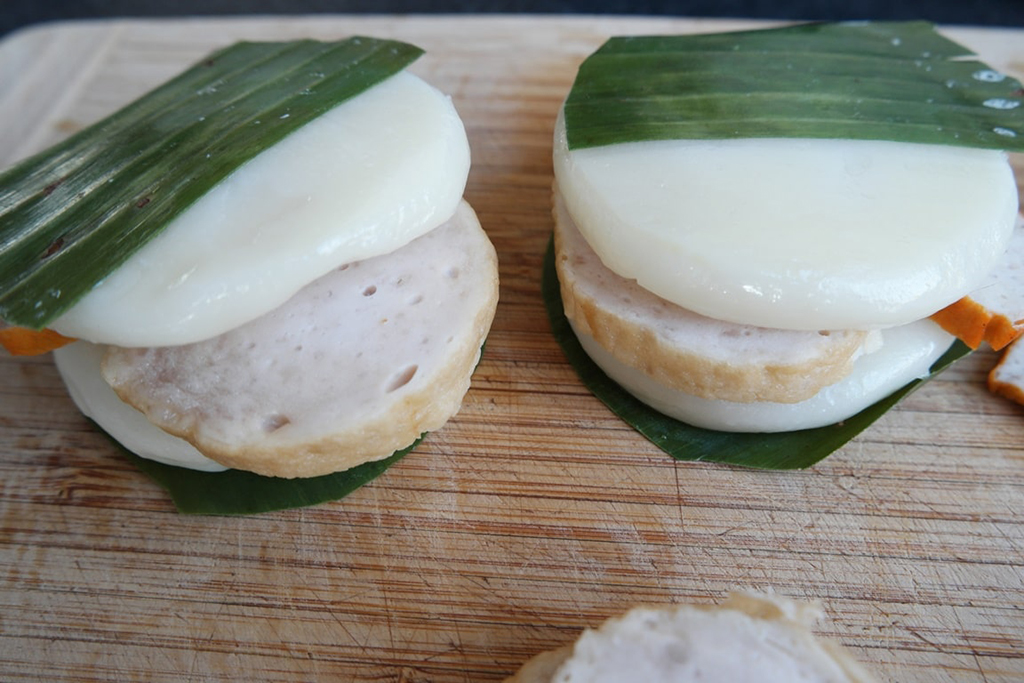
Assembling Bang Giay – Photo : Collected
Banh Day, an Easy Recipe for Everyone
Banh Day is a simple but delicious dish that represents traditional cuisine from Bac Kan. It is perfect for those looking for an authentic and lesser-known culinary experience.
Here is a simplified recipe, without mung beans, and alternatives to banana leaves if you don’t have any on hand.
Preparation time: 40 mins – Cooking time: approx. 15 mins
Ingredients for 4 people:
Glutinous rice flour: 500 g
Standard rice flour: 50 g
Warm water: 100 ml
Cooking oil: 1 tablespoon
Cha lua/Gio lua (You can replace it with cervelat) for garnish: 30 g
Steps:
Dough preparation
Mix the glutinous rice flour and rice flour until smooth. Gradually add warm water and knead until the dough is smooth and elastic.
Add 1 tablespoon of cooking oil, mix well, and continue kneading until the dough no longer sticks to your hands. Cover the dough with plastic wrap and let it rest for 15 minutes.
Steaming
Cut the banana leaves into round pieces and brush them with cooking oil. Then, take a bite of dough, roll it into a ball, flatten it, place it on a banana leaf, and steam it for 15 minutes.
Assembly
Serve the Banh Day hot or cold, sliced, with Gio Cha, somewhat like a sandwich. If needed, replace Gio Lua with cervelat.
Why not?
For a more intense flavor, you can add a bit of pork fat to the glutinous rice dough.
Alternatives to Banana Leaves
Pandan leaves: Pandan leaves are commonly used in Asian cuisine for their unique fragrance and intense green color. They will bring a slightly different flavor to Banh Day, but equally delightful. You can find them in Asian grocery stores.
Parchment paper: If you can’t find banana or pandan leaves, you can use parchment paper to wrap the rice cakes. It won’t add a particular fragrance, but it will help maintain the shape of Banh Day during cooking.
The soul of northern Vietnam reveals itself in its contrasts. Between the shimmering waters of Lake Ba Be and the historic caves of Pac Bo, an initiatory journey emerges, blending natural splendor with the historical depth of a nation. This escapade offers much more than a simple excursion: it is a dive into the essence of Vietnam itself, where every step tells a story, where every landscape bears the imprint of time.
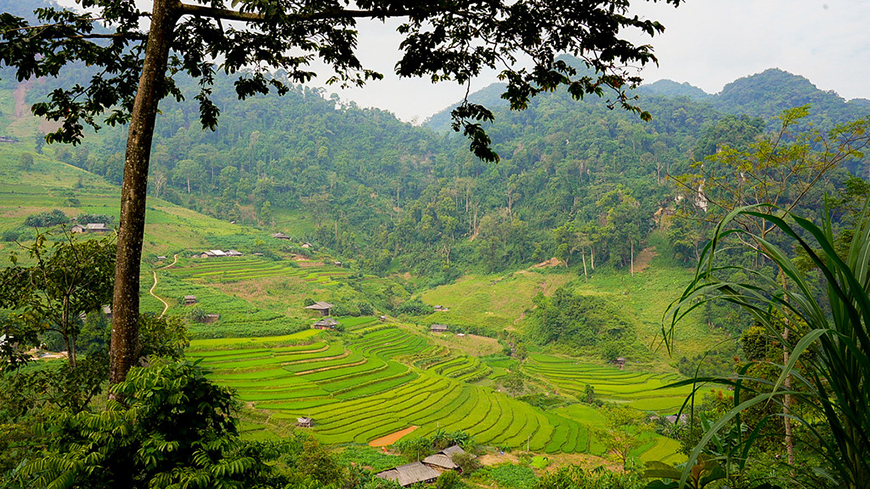
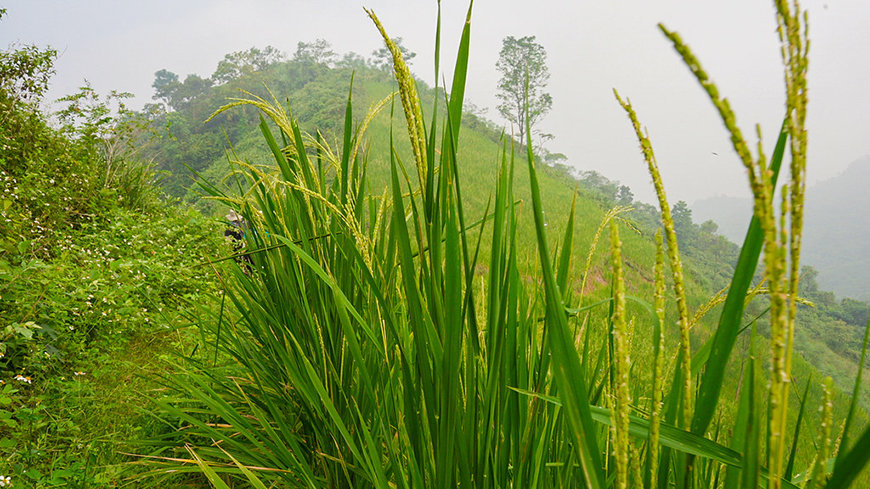
Rice fields in Ba Be – Photo : Mr Linh’s Adventures
A journey between two worlds
Ba Be National Park stands as a natural jewel nestled in the mountains of the north. Its peaceful waters, deep blue, reflect the sky while ancient forests whisper their secrets to travelers. Tumultuous waterfalls punctuate the landscape, creating a natural symphony that resonates in the valleys. This wild beauty contrasts beautifully with the historical austerity that awaits visitors in Pac Bo.
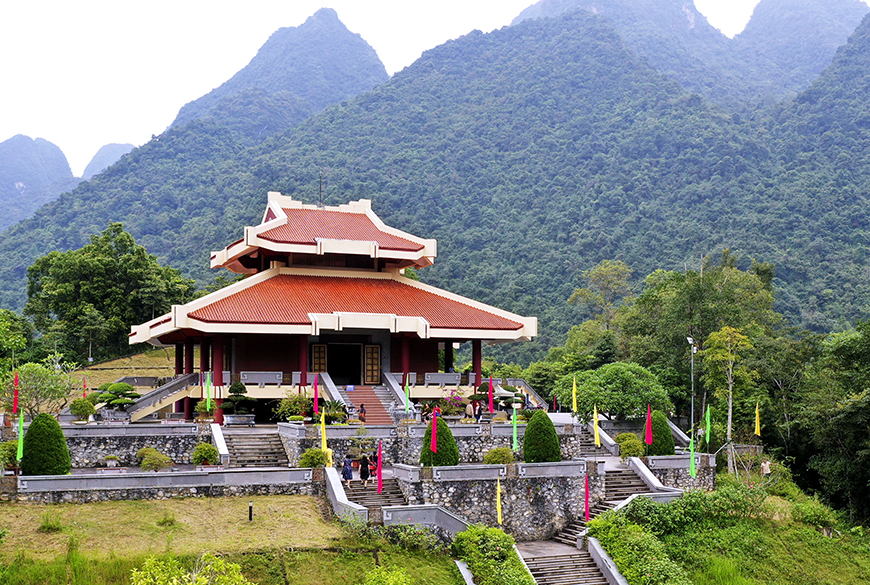
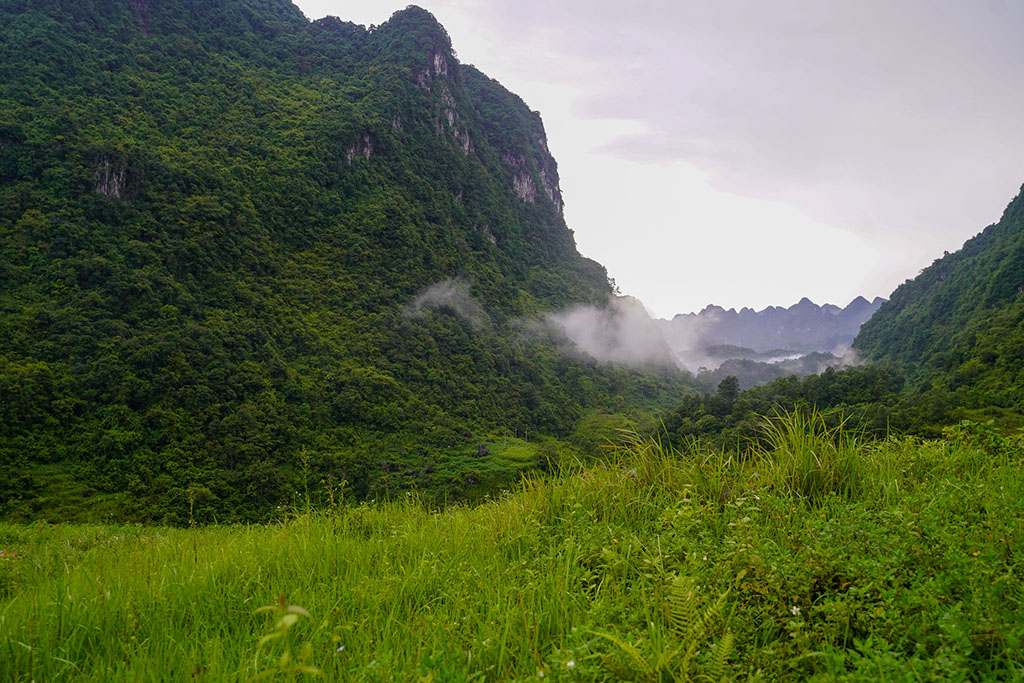
A few hours’ drive away, Pac Bo tells another story, that of a man and a nation in search of freedom. It is here that in 1941, after three decades of absence, Ho Chi Minh set foot again on his native land. While the cave and museum commemorating this event may seem modest, the journey itself becomes a transcendental experience. The winding road leading to it traverses a landscape of stunning beauty: traditional villages nestled in the valleys, terraced rice fields climbing the mountainsides, all dominated by imposing karst formations that cut through the horizon like silent sentinels.
Uncle Ho Memorial – Photo :Ho Chi Minh Official Website
The adventure of the journey
The journey between these two iconic sites becomes an adventure in itself, an immersion into rural and authentic Vietnam. From Ba Be, travelers have several options to reach Cao Bang. Local buses, true windows into daily life, connect Cho Ra to Cao Bang in a 3-4 hour journey punctuated by stops in villages. For those who prefer comfort, taxis and private cars offer a faster alternative, reducing the journey to 2-3 hours.
From Cao Bang, the road to Pac Bo unfolds like a history book. Local buses wind through the mountains, while xe om (motorbike taxis) offer a more intimate experience, allowing you to feel every turn. Renting a car with a driver, although more expensive, allows for an in-depth exploration of the region, with the opportunity to stop at will to photograph a particularly striking landscape or visit a traditional village.
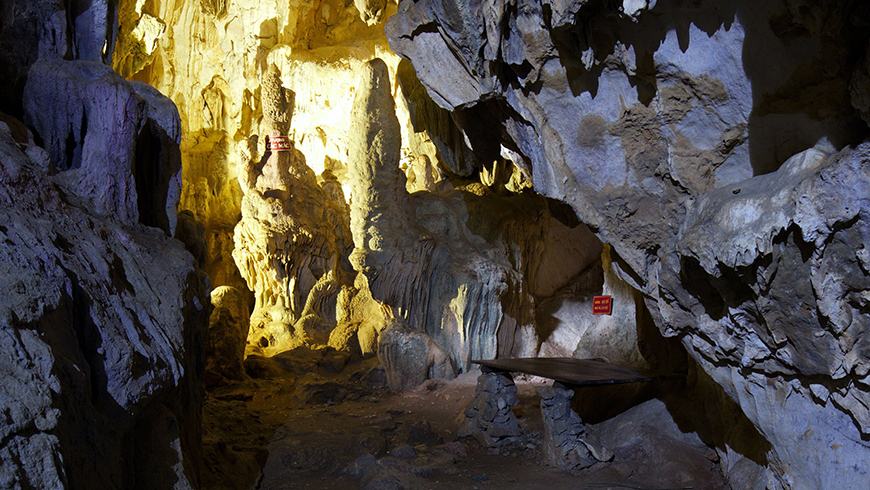
Hang Coc Bo – Photo : Vietnam Record Organization (VietKings)
Following in Uncle Ho’s footsteps
Pac Bo reveals itself as a sanctuary of national memory.
The Coc Bo cave, accessible after a peaceful walk from the main parking lot, still resonates with the presence of the man affectionately called Uncle Ho by the Vietnamese. On weekends and holidays, the site comes alive with groups of Vietnamese pilgrims paying homage to this historical figure. During the week, however, calm prevails, allowing for a more contemplative experience.
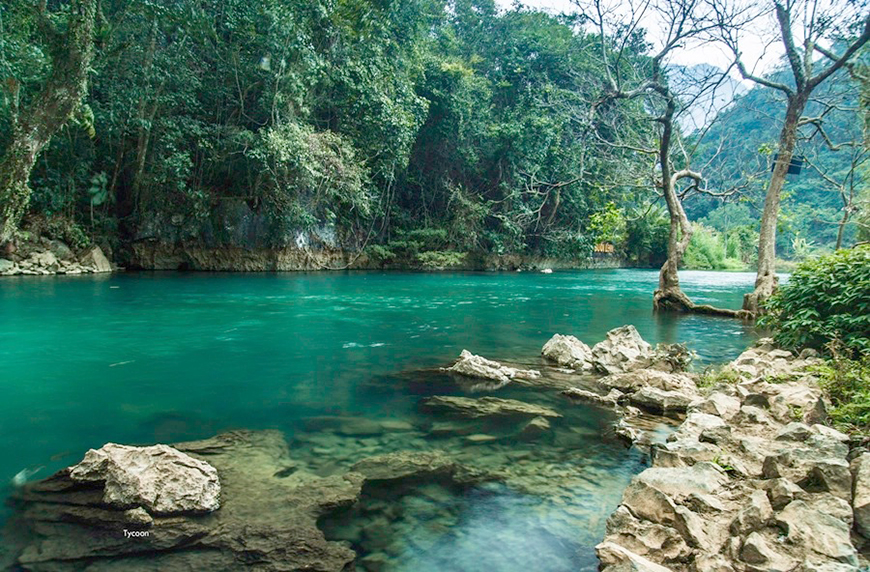
For a modest fee of 20,000 VND, visitors can explore the entire site, including an electric buggy ride for those interested. The path winds along the Lenin stream, whose crystal-clear waters reflect the imposing flanks of Karl Marx Mountain – these evocative names bearing witness to the ideology that would shape the country’s history.
The stone table where Ho Chi Minh worked, of monastic simplicity, alone tells of the austerity and determination of the man who would transform his country. The Pac Bo museum and memorial enrich the visit with valuable historical contexts, allowing you to understand how this remote place became the cradle of a revolution.
Suoi Le Nin – Photo : Vietnam Record Organization (VietKings)
Culinary treasures and practical tips
Local cuisine deserves attention, offering a feast for the senses that complements the cultural experience. Banh khao, a cake made of glutinous rice flour with subtle flavors, accompanies khau sli, a delicate combination of glutinous rice, peanuts, and honey. The fragrant mushrooms of the region, tolomane vermicelli, and dried bamboo shoots tell the culinary story of these mountains, where each dish is the result of centuries-old tradition.
The best time to undertake this excursion is from October to April, during the dry season, when the mild climate facilitates exploration. However, the rainy season, from May to September, has its own charms: the landscapes are adorned with vibrant greenery, and the terraced rice fields become glistening water mirrors.
An accessible journey for all
This adventure can adapt to all budgets. Budget-conscious travelers will opt for public transportation and simple accommodations, while those seeking more comfort can choose more luxurious options. Whatever the chosen formula, the experience remains unforgettable. This escapade transcends mere tourist excursions. It is a journey through time and space, an immersion into the soul of Vietnam.
From the natural serenity of Ba Be to the historical solemnity of Pac Bo, each moment contributes to a deeper understanding of this fascinating country. The spectacular landscapes, poignant history, and rich cultural heritage combine to create an experience that leaves a lasting impression and touches the hearts, reminding us that the most enriching journey is one that allows us to understand not only the places, but also the men who shaped them.
Between karst peaks and verdant valleys, Cao Bang province reveals an unspoilt Vietnam where nature reigns supreme. Just a few hours from Lake Ba Be, this territory, still largely unknown to traditional tourist circuits, offers a mosaic of authentic experiences, combining natural splendors and age-old traditions.
Ban Gioc Waterfalls – Photo : Mr Linh’s Adventures
The Majestic Ban Gioc Falls
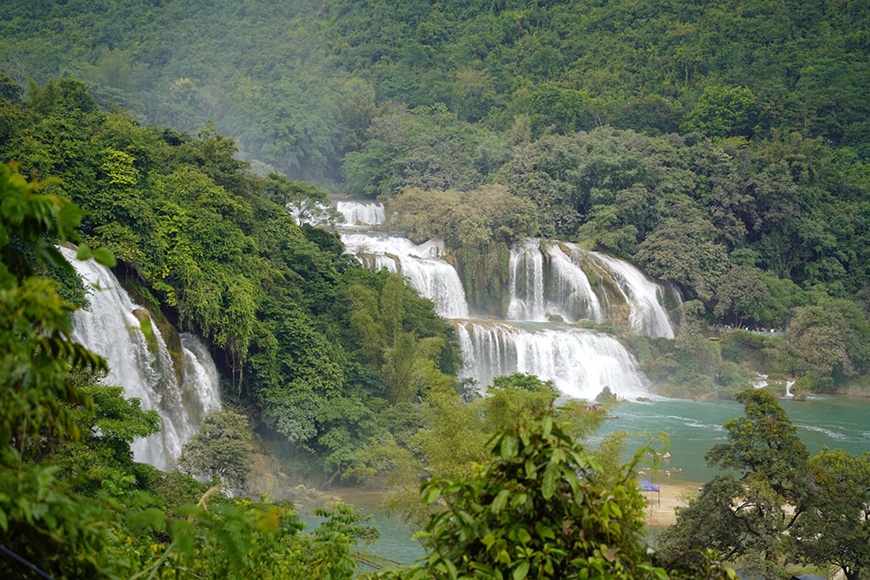
A natural jewel of Northern Vietnam, the Ban Gioc waterfall cascades in three majestic tiers at the Sino-Vietnamese border. Its turquoise waters flow down limestone cliffs over 30 meters high, creating a grand spectacle. Visitors can get up close to the phenomenon on traditional bamboo rafts or hike along the trails offering spectacular viewpoints.
Tiger Cave – Photo : Mr Linh’s Adventures
The Mysterious Nguom Ngao Cave
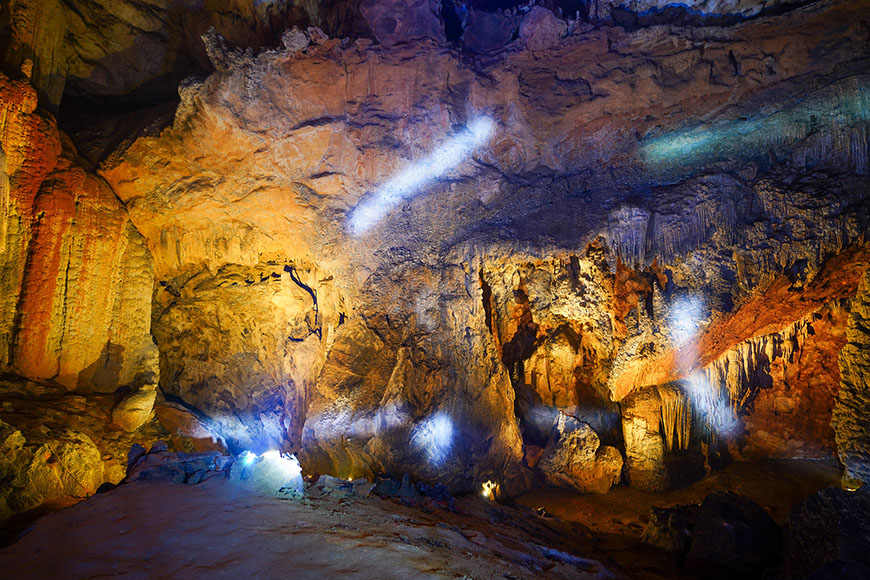
Just 4 km from Ban Gioc, the Nguom Ngao Cave (“Tiger Cave” in the Tay language) reveals a fascinating underground world. With nearly 2 km of accessible galleries, extraordinary limestone formations sculpted by time tell a story millions of years old. The modern lighting enhances the natural beauty of this unique setting.
Non Nuoc Cao Bang Geopark
Recognized by UNESCO, this global geopark covers over 3000 km². It boasts an exceptional karst landscape, a witness to 500 million years of geological evolution. Hikers will discover remarkable biodiversity, prehistoric fossils, and important archaeological sites. Well-marked trails allow for safe exploration of this natural sanctuary.
The Peaceful Thang Hen Lake
Nestled amidst limestone mountains, this high-altitude lake offers a moment of serenity. Its crystal-clear waters perfectly reflect the lush surrounding vegetation. Kayaking enthusiasts will find an ideal playground here, while photographers will particularly enjoy the golden light of the sunrise.
The Secret Valley of Phong Nam
Off the beaten path, Phong Nam Valley unveils the authentic rural Vietnam. Along the Quay Son River, terraced rice fields and traditional villages create a particularly spectacular scene during the harvest season, between September and October.
Encens Village – Photo : Mr Linh’s Adventures
The Soul of Traditional Villages
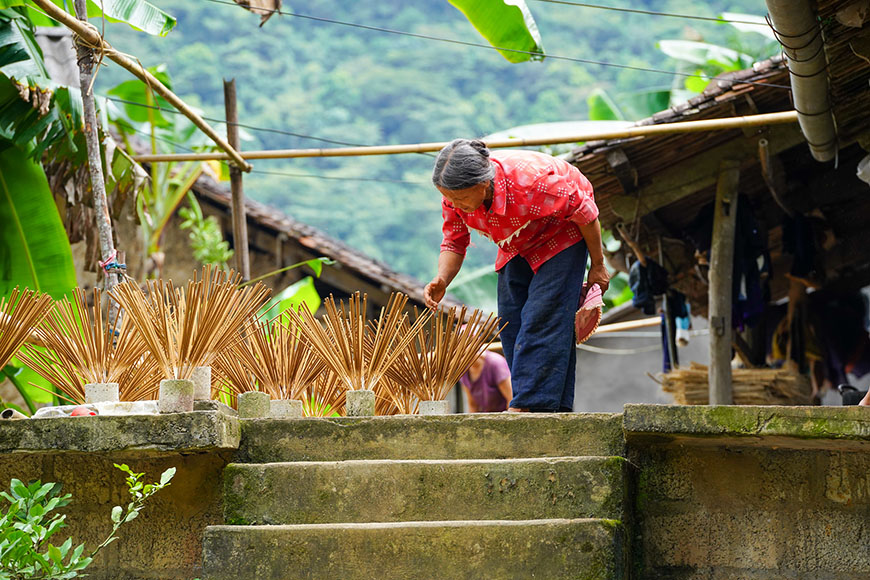
The region boasts a rich cultural heritage, evident in its ancestral villages. In Phia Thap, artisans continue the ancient art of incense making, while Pac Rang is home to centuries-old blacksmithing traditions. In Phuc Sen, skilled knife makers perpetuate generations-old techniques, shaping steel into exquisite blades.
Travel Tips
Ideal Timing
Plan for 3 to 5 days to comfortably explore the region. A longer stay will allow for a deeper immersion in the local culture.
A traditional house – Photo : Mr Linh’s Adventures Team
Optimal Season
The best times to visit are
– March to May: mild and pleasant spring weather
– September to November: moderate temperatures and golden harvest landscapes
Avoid if possible July-August, a period of intense monsoon rains that can complicate travel.
Transport and Accommodation
– From Hanoi, expect a 7-8 hour drive
– Various accommodation options are available, from authentic homestays to comfortable hotels. Our favorite : Ba Be Jungle Houses
– Renting a motorcycle or hiring a driver is recommended for exploring the region
Imagine for a moment… A melting pork belly delicately combined with pieces of purple taro, all simmering in a sauce with enchanting aromas. Welcome to the world of Khau Nhuc, one of the seven gastronomic wonders of Bac Kan province!
Khau Nhuc Bac Kan – Photo : Internet
Purple taro, an underrated star of our plates
Before tantalizing you with our main dish, let me introduce you to its star ingredient: purple taro. This tuber-like no other hides under its rustic skin a heart of such intense color that one could almost suspect it of resisting culinary monotony!
Small in size but grand in history, purple taro can boast of being one of the elders of our food cultures. Just think: our ancestors were already cultivating it 28,000 years ago! From Southeast Asia, it made its way around the world, seducing the Chinese, the Egyptians, and even the Romans – who, apparently, did not live solely on bread and games.
A tale of culinary encounters
Khau Nhuc is like those beautiful love stories that cross borders. Born in Cantonese kitchens, it packed its bags for Vietnam thanks to the Tay and Nung ethnic groups. Its very name is a poem in itself: “Khau” for “steamed until tender,” “Nhuc” for “meat.” The Cantonese, true romantics, even see in it a symbol of growth and future in its presentation in the shape of a small hill.
The Bac Kan version: when taro makes the difference
If you thought Khau Nhuc was just a simple braised pork dish, think again! In Bac Kan, it is a true symphony of spices where mac mat (a spicy cousin of pepper) dances with shiitake mushrooms, where garlic flirts with ginger, and where dried onions play the matchmaker.
But the real secret, as poet Duong Thuan (whose family has been settled at Ba Be Lake for three generations) confides, is not the pork… but the local taro with mysterious purple veins. A variety so special that it makes all the difference between a good Khau Nhuc and a Khau Nhuc from Bac Kan.
Khau Nhuc, the true savor of bac Kan – Photo : Internet
The recipe for happiness
I leave you with a simplified recipe, perfect for getting started with this culinary marvel. Beware, once you’ve tasted it, chances are that Khau Nhuc will become your new favorite comfort dish!
Ingredients
– 500g pork belly
– 300g purple taro (or another variety of taro)
– 1 tablespoon salt
– 1 teaspoon black pepper
– 2 tablespoons soy sauce
– 1 tablespoon sugar
– 1 tablespoon minced garlic
– 1 tablespoon minced onion
– Banana leaves (for wrapping)
Instructions
Pork Preparation
– Cut the pork belly into pieces about 3 to 4 cm.
– In a bowl, mix the pork with salt, black pepper, soy sauce, sugar, garlic, and onion. Marinate for about 30 minutes.
Taro Preparation
– Peel the purple taro and cut it into pieces similar to the pork.
– Steam the taro pieces until tender.
Assembly
– Take a banana leaf and place a layer of marinated pork pieces, followed by a layer of cooked taro. Repeat until all ingredients are used.
– Wrap everything well in the banana leaf to form a package.
Cooking
– Cook the package in a steamer basket or in a pot of boiling water for about 1 hour, until the meat is well cooked and tender.
Serving
– Remove the banana leaf package and let it rest for a few minutes before opening.
– Serve hot, accompanied by sticky rice and aromatic herbs.
So, are you ready to embark on the adventure of Khau Nhuc? One thing is certain: your taste buds will thank you for daring this gustatory journey to the heart of North Vietnam!
Nestled in the heart of the mountains of Bac Kan province , Ba Be stands out as an emerging destination that is attracting an increasing number of travelers.
Here are five compelling reasons that make Ba Be a must-visit in 2025.
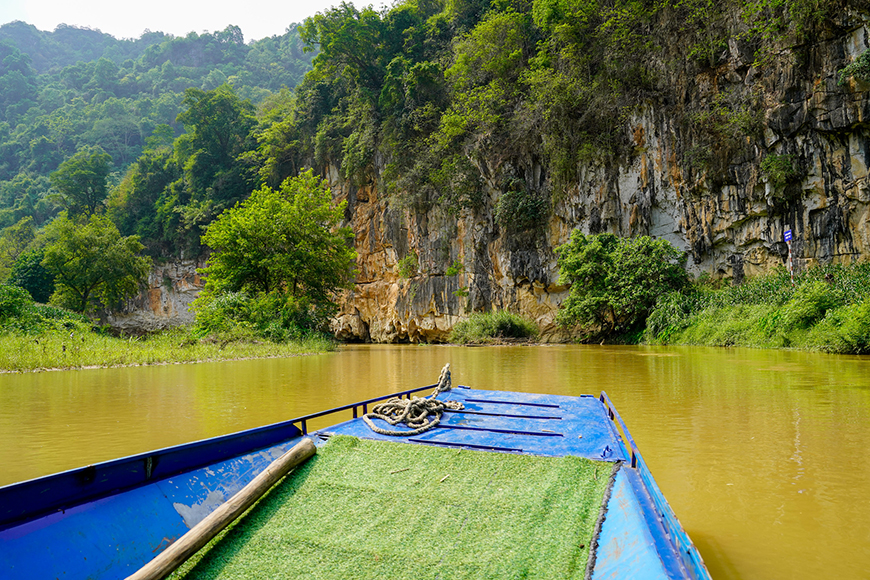
Boat trip oon Ba Be Lake – Photo : Mr Linh’s Adventure
Stunning Natural Beauty
Ba Be National Park is a true sanctuary of wild landscapes. With Ba Be Lake, the largest natural freshwater lake in the country, visitors are immersed in an idyllic setting where majestic karst cliffs tower above lush tropical forests. Whether through peaceful cruises on the lake or exploring hidden caves, every corner of this park reveals its unique beauty. Waterfalls, like Dau Dang waterfall, offer enchanting panoramas, perfect for photography and nature enthusiasts.
Exceptional Biodiversity
The ecological richness of Ba Be is astounding. The park is home to over 106 fish species and 230 bird species, not to mention unique wildlife such as the Chinese pangolin and Francois’ langur. This biodiversity makes it an ideal destination for nature lovers, bird watchers, and anyone wishing to observe rare species in their natural habitat. Guided tours can be arranged for those who want to learn more about this fascinating ecosystem.
Ba Be paradise of biodiversity – Source : Mr Linh’s Adventure
Authentic Ethnic Culture
Ba Be is a cultural crossroads where various ethnic communities, such as the Tày, Nung, Dao, and Hmong ethnic groups harmoniously coexist.
Visitors have the opportunity to immerse themselves in their traditions by staying in local stilt houses, where they can participate in activities. Learning to prepare traditional dishes, discovering local crafts, or attending festivals are experiences that help understand the richness of these cultures. These exchanges offer an authentic perspective on the daily life of the inhabitants.
Diverse Outdoor Activities
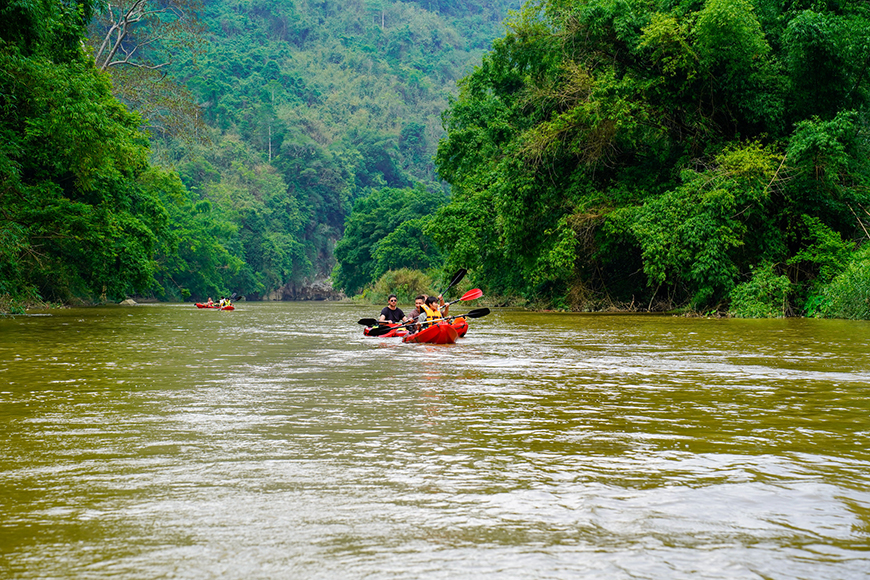
For adventure enthusiasts, Ba Be offers a plethora of outdoor activities. Hiking, kayaking, and cave exploration are ideal options to discover the natural beauty of the park. Hiking trails wind through changing landscapes, from emerald rice fields to dense forests, giving visitors the chance to observe local wildlife in its natural environment. Experienced guides are available to accompany groups and ensure a safe and rewarding experience.
Spring Festival at Ba Be lake – Source : Mr Linh’s Adventure
Responsible Ecotourism
Ba Be positions itself as a model of responsible ecotourism. Visitors have the opportunity to participate in conservation initiatives that support the local economy while preserving the natural beauty of the park. By opting for environmentally friendly tours, travelers contribute to the protection of natural resources while having an enriching experience.
Your Next Destination in Vietnam in 2025
Ba Be represents an ideal destination for those seeking a combination of adventure, nature, and cultural immersion in 2025. Whether you are an outdoor enthusiast, a biodiversity lover, or a cultural explorer, Ba Be promises you an unforgettable experience.
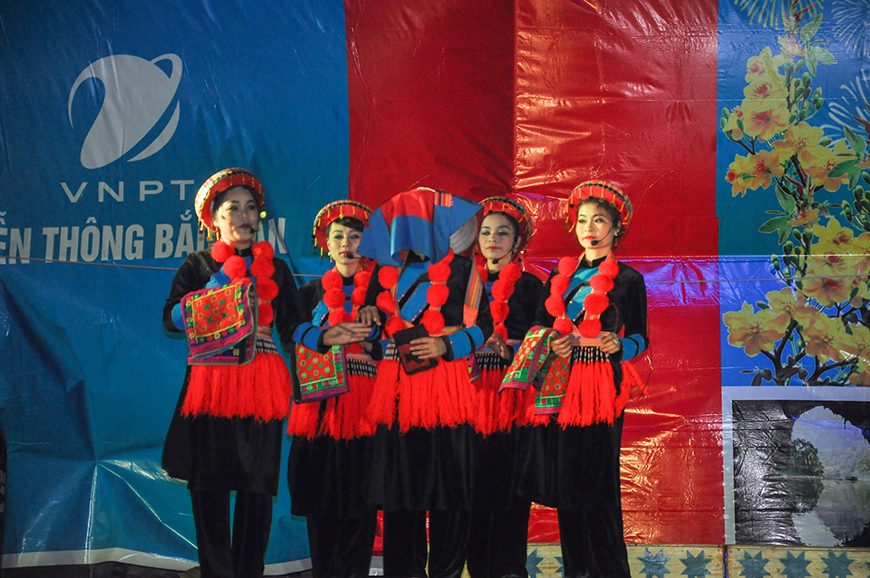
Kayaking in Ba Be National Park – Source : Mr Linh’s AdventureTraditional Music – Ba Be lake – Bac Kan – Source : Mr Linh’s Adventure
Nestled in the heart of the mountains of Northeastern Vietnam, the province of Bac Kan province is a true hidden gem. Dominated by the majestic Ba Bê Lake, it offers breathtaking landscapes, exceptional biodiversity, and incomparable tranquility.
Ba Be National Park – Photo : mr Linh’s Adventure
A preserved natural paradise
Ba Be National Park is a must-visit destination for nature lovers. Immerse yourself in the park’s pristine primary forests, marvel at the stunning Puong Cave, adorned with intricate stalactites and stalagmites. For the adventurous, the rewarding ascent of Dau Dang Waterfall offers breathtaking panoramic views.
Continue your journey to Ba Be Lake, where you can rent a kayak or traditional boat to explore its turquoise waters. Swim, fish, or simply relax on the sandy beaches.
To complete your adventure, visit Kim Hy Nature Reserve. Here, you can observe the elusive François’ langurs, an endemic monkey species, in their natural habitat. Bird enthusiasts will also be delighted by the diverse avian life.
Immerse yourself in the daily lives of the locals by visiting the charming villages of Phieng Phang and Phieng An. Discover their distinctive stilt houses, witness the intricate artistry of weaving and basketry, and be captivated by traditional dances and songs.
Indulge your senses with the local cuisine, savoring delicacies like banh cooc mo (glutinous rice cake), khau nhuc (a savory taro and pork dish), and the exquisite flavors of forest honey.
Participate in the numerous local festivals that enliven village life. Marvel at the colorful costumes, vibrant processions, and heartfelt offerings to ancestors
Ba Be lake – Source : Mr Linh’s Adventure
History and Heritage
Bac Kan boasts a rich and storied history. Explore archaeological sites and historical landmarks that offer glimpses into the region’s past.
Admire the architectural wonders of the region, including pagodas with graceful curved roofs and traditional stilt houses, testaments to the ingenuity of the local people.
Traditional Food Bac Kan – Source : Mr Linh’s Adventure
Activities for all tastes
For the adventurous, Bac Kan offers a plethora of outdoor activities. Embark on exhilarating hikes through the region’s mountainous terrain and lush forests.
Ba Bê Lake is a haven for water sports enthusiasts, offering opportunities for kayaking, paddleboarding, and swimming in its crystal-clear waters.
Delve into the subterranean wonders of the region by exploring the numerous caves, such as the enchanting Puong Cave.
When to go?
The best time to visit Bắc Kạn is from November to April, during the dry season. The temperatures are pleasant, and the climate is conducive to outdoor activities.
How to get there?
Bac Kan is accessible by bus from Hanoi. The journey takes about 5 hours.
Traditional Music – Ba Be lake – Bac Kan – Source : Mr Linh’s Adventure
Practical tips
– Clothing: Pack light clothes for the day and a sweater for the evening, along with good walking shoes.
– Health: No specific vaccinations are required. Remember to protect yourself from mosquitoes.
– Money: The local currency is the Vietnamese đồng. You can withdraw money from ATMs in major cities.
Bac Kan is an authentic destination that will offer you a complete change of scenery. Do not hesitate to come and discover its natural and cultural riches!
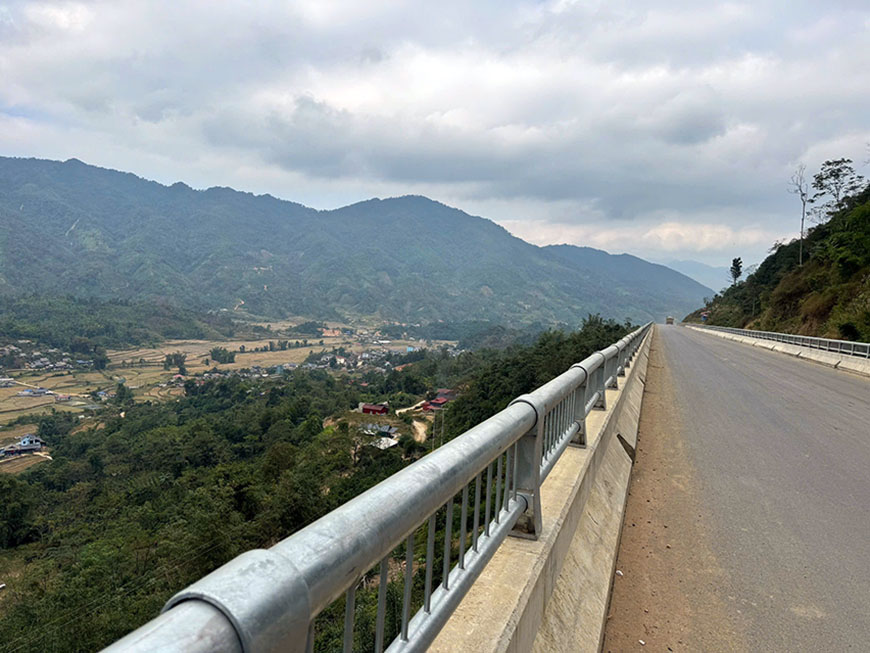
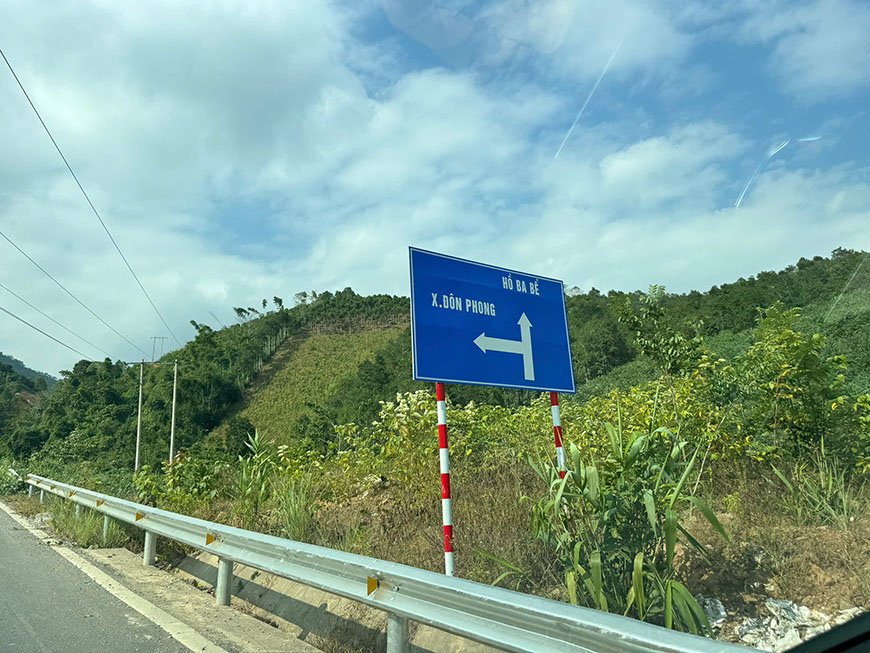
In the heart of northern Vietnam, a new road cuts through the lush mountains of Bac Kan province, promising to enhance access to one of the country’s natural treasures: Lake Ba Be. This 39-kilometer infrastructure project, in its final construction phase, represents more than just a route; it is a gateway to the future for the entire region.
Connecting Bac Kan city to Ba Be Lake – Source : Mr Linh’s Adventure
Bridging the Gap between City and Nature
The road connecting Bac Kan to Ba Be Lake embodies the province’s vision of sustainable development. Designed with environmental concerns in mind, it offers travelers a scenic journey through rice paddies and ethnic villages. Despite challenges such as Typhoon Yagin and complex terrain, the outcome promises to meet expectations. **Note**: The completion of the section between Ba Be and Na Hang in Tuyen Quang province is set for late April 2025.
Favorable Economic Context
This project is part of a broader development momentum. Bac Kan, abundant in natural resources and tourism potential, aims to enhance its attractiveness and improve the quality of life for its residents. A massive investment of nearly $292 million is planned for the road network development between 2021 and 2025.
The road significantly reduces travel time between the city and the lake, facilitating economic and cultural exchanges.
Boosting Tourism
With a modern road, access to Lake Ba Be will be improved, fostering tourism development in the region.
Stimulating the Local Economy
The project will create new jobs and energize the hospitality, catering, and service sectors.
Advantages of the New Road
In addition to easing transportation, this road offers several benefits:
Scenic Route: It provides spectacular views of the surrounding nature, turning every journey into a unique experience.
Modern Infrastructure: Built to recent standards, it features quality surfacing and efficient safety equipment.
Positive Environmental Impact: Local authorities have integrated sustainable solutions to minimize effects on fragile ecosystems.
Splendid views along the new road – Source : Mr Linh’s Adventure
A Promising Future for Ba Be Lake
The operation of this road is expected to significantly boost tourism in Ba Be National Park, improving access to floating villages and water activities. Ultimately, it could make Lake Ba Be a must-visit destination in Vietnam.
Conclusion
The construction of the road between Bac Kan and Lake Ba Be is an ambitious project that showcases the authorities’ commitment to developing the region. By enhancing connectivity and access to an exceptional natural site, this new route will open up new perspectives for the economic and tourist development of the province.
Connecting people to the future – Source : Mr Linh’s Adventure
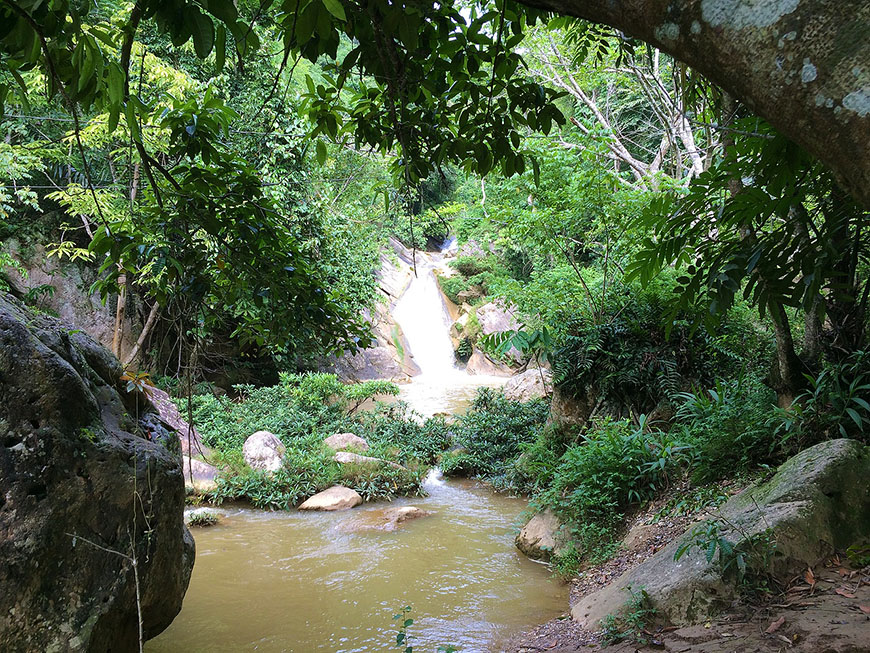
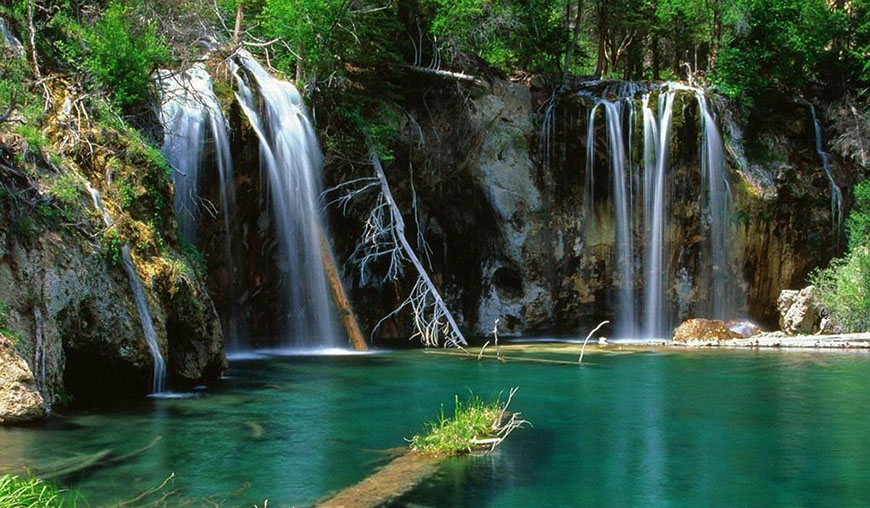
Nestled at the foot of Mount Già Cáy in the province of Bac Kan, the Na Khoan waterfall reveals its charms to travelers in search of authenticity. This natural gem, located just over 200 kilometers north of Hanoi, offers a breathtaking spectacle where crystal-clear water gracefully cascades down four successive levels over a length of 600 meters.
Na Khoan fall – Source : Internet
Location of Na Khoan Waterfall
You will find the Na Khoan waterfall at the foot of Đèo Gió (Wind Pass), in the village of Na Khoan, near the town of Nà Phặc, in the Ngân Sơn district (Bac Kan Province). Located about 45 km north of Bắc Kạn town, it is easily accessible from National Highway 3. It takes about 4.5 hours to drive from Hanoi and around 1 hour and 45 minutes from Ba Be Jungle Houses if you are staying on the shores of Ba Be Lake.
Good to know: Two trails lead to the waterfalls upstream of Na Khoang. Adventurers can take the steep path for a more intense experience. Others can follow the trail along Na Dang stream. All visitors can enjoy the freshness and beauty of nature, thanks to the preservation of bamboo forests in the surrounding areas.
Na Khoan waterfall – Source : Internet
What to see and do at Na Khoang Waterfall
Admire the landscape
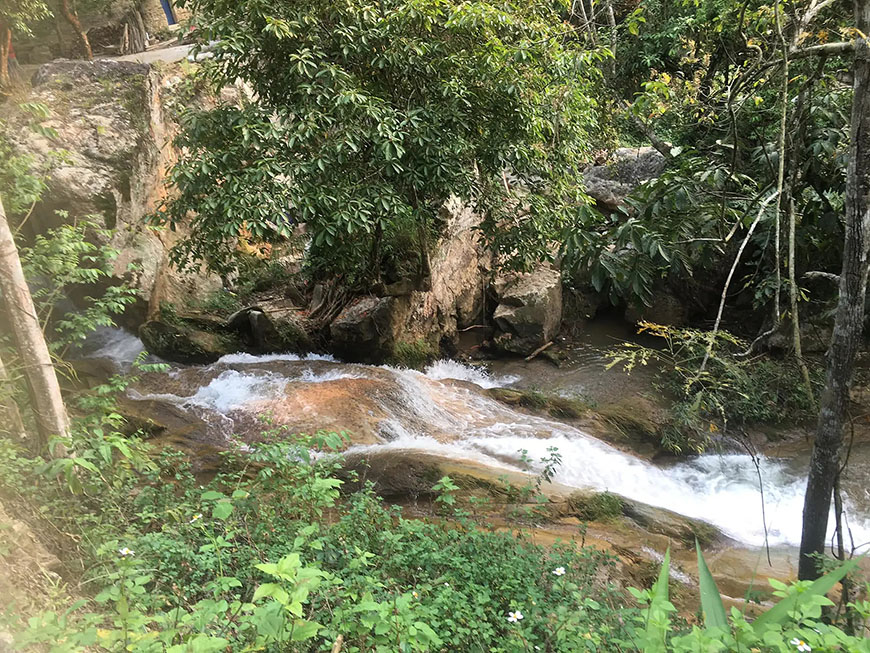
Of course, there is the spectacle of white water torrents cascading, winding through rocky slopes, creating a poetic and wild beauty. Surrounding the waterfall is a virgin forest of deep green, where visitors can hear the melodious sound of flowing water, mixed with the chirping of birds, creating a charming natural scene. Na Khoang Waterfall is an ideal place to destress and escape the pressures of modern life.
Swim
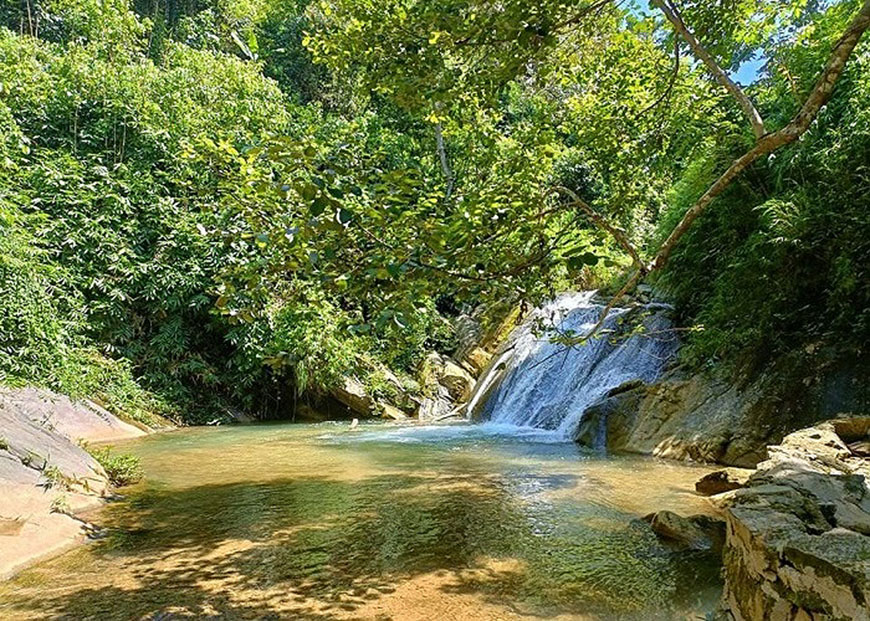
Na Khoang offers you a clear and cool blue water current, with a moderate flow rate, allowing for swimming. Immersing yourself in the clear water will help you relax. Once you’ve had enough fun, you can climb onto the large flat rocks to rest and relax.
Take a walk
From Na Khoang Waterfall, you can climb to discover the slightly higher waterfalls. If you like adventure, follow the upstream and enjoy your natural escapade in an environment conducive to inner peace and reconnecting with your deep nature.
Thac Na Khoan – Source : Internet
Best time to visit
To fully enjoy this enchanting site, it is recommended to visit Na Khoan between September and April, a period when the temperate climate and moderate rainfall create ideal conditions. Additionally, you can visit Na Khoang in the early months of the year to discover other traditional festivals of ethnic communities in the northeastern region of Vietnam.
Final word
While this natural wonder may not be a must-visit stop on a tour in the region, it does, however, combine perfectly with a visit to Ba Be National Park. Na Khoan Waterfall then represents the perfect alliance between natural beauty, cultural richness, and gentle adventure, offering visitors a refreshing break away from urban hustle and bustle.
Na Hoang Falls – Bac Kan Province – Source : Internet