
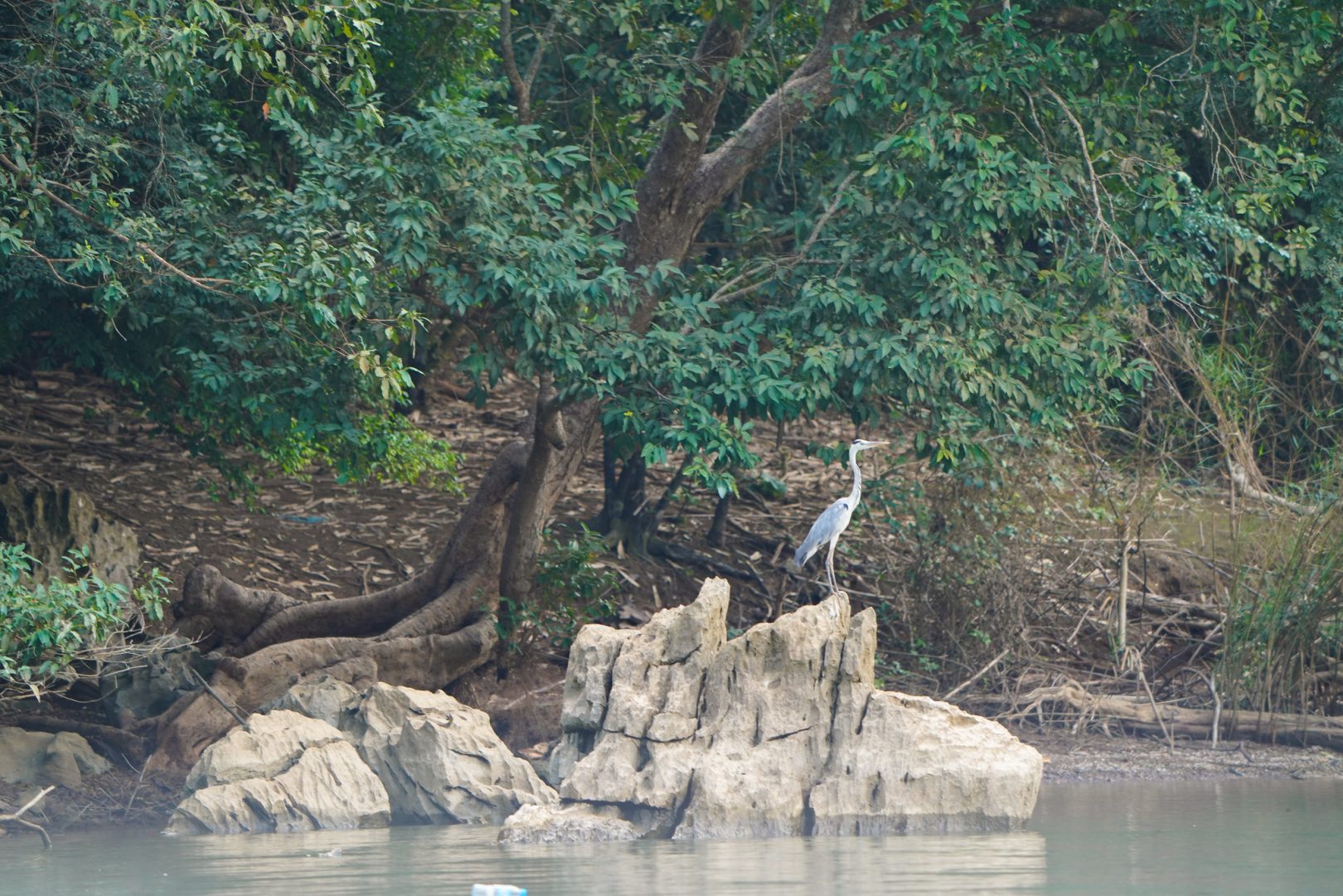
Observing migratory birds in Ba Be National Park
Every winter, Ba Be National Park hosts a relatively unknown natural spectacle for visitors: the massive arrival of birds fleeing the Siberian and Northern Chinese frosts. Follow our guide to explore this gem of Vietnamese biodiversity.
A sanctuary between lakes and forests
Globally recognized as a Ramsar site (internationally significant wetland), Ba Be is more than just a picturesque lake. It’s a mosaic of habitats where karst forests, mangroves, and rivers coexist.
Out of the 320+ bird species recorded, around fifteen rare migratory birds choose these unfrozen waters to spend the winter. Among the park’s stars are the elegant Mandarin Duck, the Northern Pintail, and the critically endangered White-eared Night Heron.
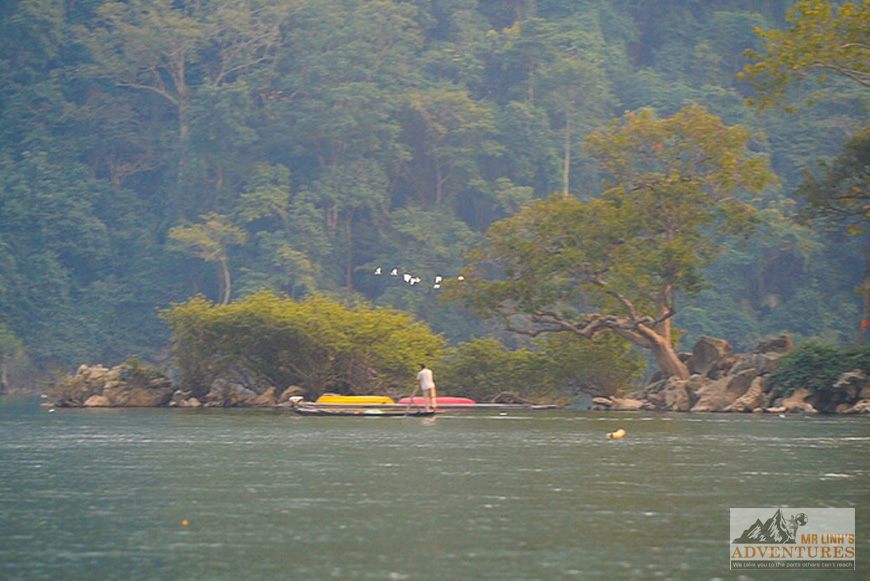
Why is Ba Be a birding hotspot?
- Strategic geographic position: The valley acts as a natural corridor between the Yunnan Plateau (China) and the Red River Delta, turning the lake into an ideal migratory stopover.
- Habitat mosaic: Subtropical moist forests, marshes, terraced rice fields, rocky outcrops—various ecological niches side by side.
- Mild dry season: From October to April, mild temperatures (15–24 °C), morning mists, low precipitation—perfect conditions for morning birdwatching.
Migratory season calendar
The season runs from October to April. Two types of travelers can be spotted: those who settle for the winter and those just passing through.
Periode | Key species | Phenomenon |
October – November | Mainly Northern Pintail | Arrival : First migrants arrive from Siberia |
December – January | Mandarin Duck, White-eared Night Heron | Wintering : peak numbers. These species stay all winter. |
February – March | Large waders (Grey Heron, Black-crowned Night Heron) | Transition : Birds gather before heading north. |
April | Indochinese Roller especially | Passage : Brief stopover for the latest “latecomer” |
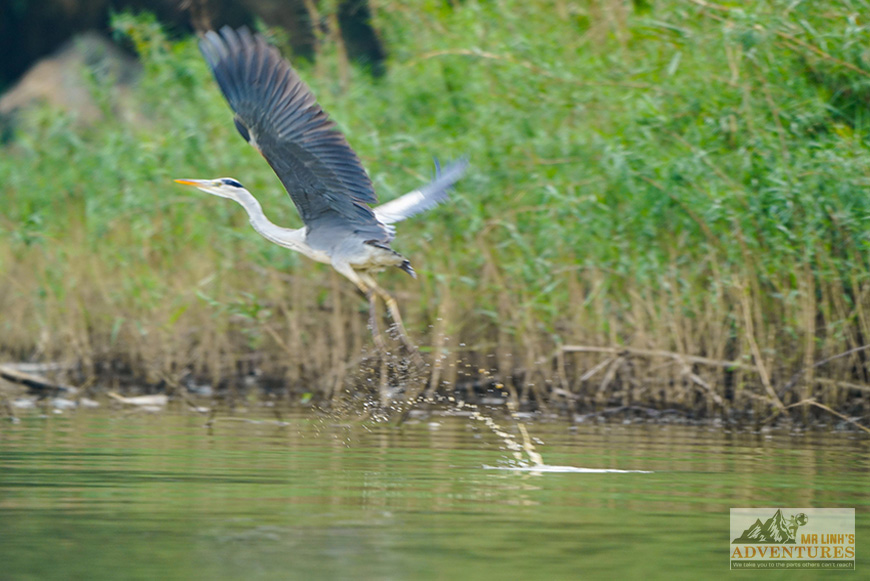
A morning immersion with Mr Linh’s Adventures
To approach these species without disturbing them, local expertise is essential. Here’s what a typical morning looks like.
- 05:00 – Lake Awakening: Briefing over Vietnamese coffee at the Pac Ngoi bridge. Binoculars check (8×42) and eBird checklist.
- 05:15 – Silent Glide: Boarding an ultra-silent electric motor canoe. Head to Dau Dang Bay, where the water is a perfect mirror.
- 06:30 – Forest Chorus: Disembark for a walk in the understory. This is where you search for Red-bellied Trogons and Barbets hidden in the canopy.
- 07:30 – Drongos Ballet: At Phuong Pass, observe the acrobatic flights of Drongos (recognizable by their forked tails) hunting insects on the wing.
- 08:30 – Review and Share: Return to the village for ginger tea. Tally the species seen (often over 25 in a morning!) before sending the data to the eBird scientific base.
► Read more : Ba Be Birdwatching – Half-Day Tour
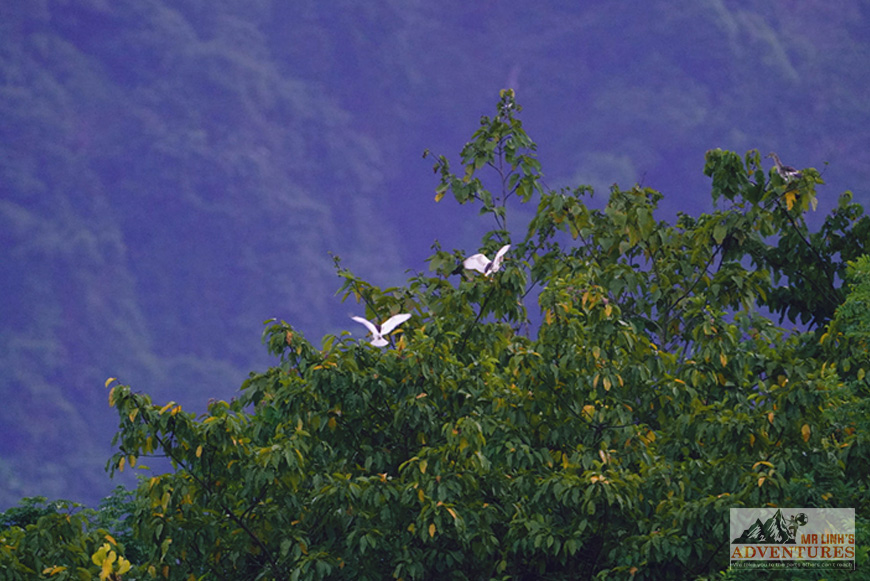
How and where to observe?
Each species has its preferred area.
- By boat or kayak (Ba Be lake): Ideal for herons and ducks.
- On a slow boat (Nang river): For the Malayan Night Heron and kingfishers.
- Hiking (limestone forest): For bulbuls, trogons, and forest raptors.
- On foot (agricultural areas): For edge birds like wagtails and chats.
Expert Tip: The best observations are made between 5:00 and 8:30 in the morning.
Prepare for your outing
- Hire a certified local guide to identify species and respect protected areas.
- Use discreet equipment: 8×42 or 10×42 binoculars, camouflage, and a voice recorder to minimize disturbances.
- Camera + 200–400 mm telephoto lens
- External battery (cold weather = quick discharge) + 10 L waterproof dry pouch (splashes)
- Lightweight raincoat (brief showers in January)
- Respect the rules: no flash, minimum distance of 20m, and contribute to community ecotourism.

Ready to bring out your binoculars?
Ba Be is not just a beautiful lake—it’s a naturally preserved birdwatching station.
Ba Be protects threatened species through eco-responsible safaris, with over 80 mammals coexisting with the birds. Visitors support conservation by choosing sustainable operators, helping to combat hunting and deforestation. As a UNESCO candidate site, the park emphasizes the importance of responsible observation for biodiversity.